NEWS
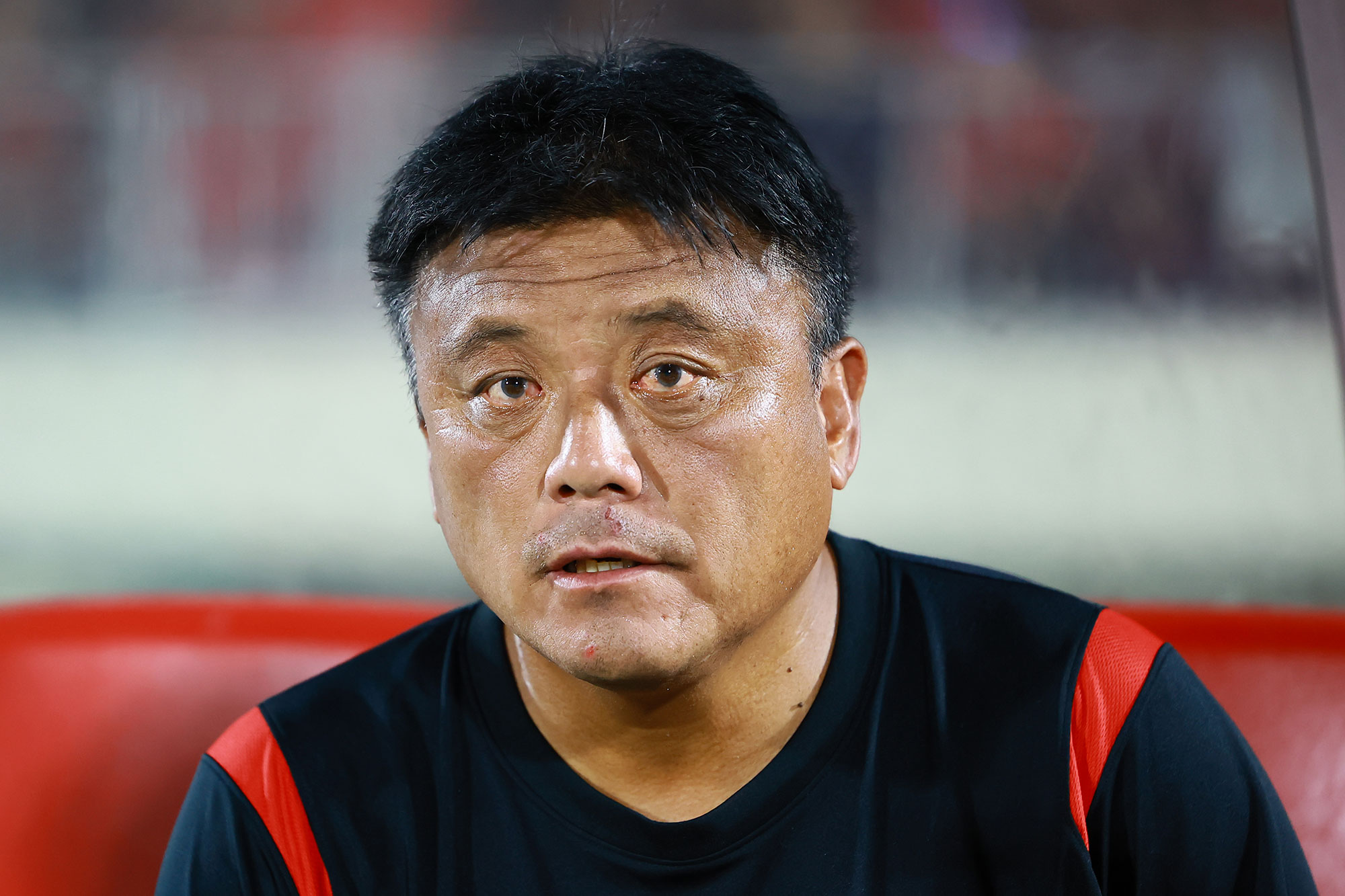
Coach Cho Kwi Jae press conference after Trial against Yamanashi Gakuin University
Emperor’s Cup: JFA 106th All-Japan Soccer Championship, Second Round vs. Yamanashi Gakuin University Trial Post-Match Comments
“It was a tough match for both teams, played on a weeknight in hot and humid conditions. Given our current position, our primary goal—including the penalty shootout—was simply to ‘win.’ We accomplished that mission, and I think this has given us the momentum to move forward.
With the exception of Miyamoto (Yuta) and Hayashi (Kotaro), I gave plenty of playing time to new players today, but I had absolutely no doubts even before the match Trial.I’ve seen the attitude they’ve shown toward training—just as they’ve demonstrated on the pitch—and how they’ve kept their heads up over the past two months even when they weren’t selected for Trial. So, the fact that these players were involved in scoring goals was, I think, the best possible boost for the team.In the three league losses Trial, there were moments where we outplayed the opponent in some respects, but I also felt that there were crucial elements missing Trial.By sharing these insights with the players—including in today’s meeting—there were still moments where we played the ball back when we should have launched a quicker attack. However, since the players’ desire to win is clearly driving them forward, I think we need to overlook their tendency to play it safe a little.
There’s still a lot we need to do to achieve the “RED GAME” we’re aiming for. Yokohama F・Marinos We’ll face Trial in the league under the same conditions, but over the next day or two, the staff and I will discuss how to ensure a quick recovery and decide on the lineup—including players who didn’t play today. Since we’ll be playing Trial at our home stadium, Saitama Stadium, again, we’ll prepare thoroughly so we can secure our first league win in front of our many fans and supporters. The players really gave it their all.”
[Q&A]
(Juri Seko started and played until about the 60-minute mark. With him on the field, I think there were many moments where the game felt very composed and went well, but regarding the balance with the slightly sluggish stretches the coach mentioned?)
“It’s not specifically about (Itsuki) Seko; overall—especially in the second half—we didn’t see enough of those ‘back-to-back’ plays when we were circulating the ball well, so there were periods where the opponent was able to defend rhythmically.
In particular, there were several occasions when we transitioned from defense to attack on the counter where we could have used our forward players a bit more to create numerical superiority on the wings.The players also had to wait a very long time to go from 2-0 to 3-0, so I get the feeling they might have become a bit cautious. In that regard, I think we achieved the absolute maximum we could realistically do today, but looking ahead, I believe we need to flesh that out further.
For Itsuki (who’s just returned from overseas) and Shiki (Yamane), the heat in Japan probably makes them feel like they have to play as if they’re always defending in a 2-on-3 or 3-on-4 situation. Once they get used to that, I think their performance will improve even further.”
(From the time you went up 2-0 in the first half until around halftime, I think the Reds were controlling the game by keeping possession at a leisurely pace. Do you view that as a positive?)
“Of course, there’s also the idea of using possession to rest. In the recent match against FC Machida Zelvia, for example, people said, ‘That’s not like Coach Cho,’ or ‘The Reds have started doing things they’ve never done before,’ but in my mind, that wasn’t the case at all.
When facing an opponent, adapting to their formation and tactics to create a style like that against Trial is one aspect of our range. However, I think it’s putting the cart before the horse to override what the players at Urawa Reds are naturally good at—and even suppress their strengths—just to impose the manager’s vision. If we can find that balance and the sweet spot, I believe the players will gain confidence and be able to build on new approaches.
In that sense, even today there are moments lingering in my mind where I think, “Maybe we should have done this a little differently,” but given the heat and the score difference, I believe the plays they chose were made with the goal of winning in mind. I don’t consider those choices to be bad or the worst possible decisions.
However, especially in the match against Sanfrecce Hiroshima, after tying the score at 1-1, we let the game get a bit frantic, and ended up conceding a goal just before halftime. The same goes for the match against Gamba Osaka. It would be better if we could execute that style of play—where we keep the opponent off balance, penetrate their half, and make the transition—on our own. I think some of those decisions were left up to the players themselves.”
(The chemistry between Seko and Jumpei Hayakawa seemed strong—with Seko creating opportunities at Trial and Hayakawa triggering the attack—which looked like a promising combination for the Reds moving forward. What is your assessment as the coach?)
“As for (Hayakawa) Shunpei, he’s left-footed and technically skilled—he’s a player with speed, a good shot, and creativity. Today, I thought he did an excellent job of finding space when a defender closed in on his position, drawing the opponent out, and acting as a playmaker.
If I were to be a bit more demanding, I’d like to see a little more power in his finishing—I think that’s one hurdle he needs to overcome. As for the interplay among the three midfielders, I think it worked well in a different sense.”
(There was some talk that we held onto the ball a bit too long in the Machida match. I think that comment came up because Coach Cho’s team is perceived as playing fast and aggressively up front—so what exactly do you want to achieve with the players you have now?)
“If I answer that, it would feel like I’d have to reveal all the tactics I have in mind.
For example, when I became the coach of Urawa Reds, I thought I understood their strengths and what made them strong as a team from playing against them. However, there were also aspects where I couldn’t quite deny that those same strengths could simultaneously become their weaknesses.
We’ve been working on finding that balance since training camp. With my previous team, Kyoto Sanga F.C., and the one before that, Shonan Bellmare, we didn’t start out the way Urawa Reds did, so I have absolutely no intention of trying to replicate that approach here.
However, the Reds players do try to follow my instructions exactly. Even if they have their own ideas—like, “Wouldn’t this be better?”—they still adjust their play to fit the direction the coach is aiming for. They have that habit in a good way, and recently I’ve found myself wondering if this situation arose because I may have pushed them a bit too hard.The fact that the Machida match turned out the way it did Trial was exactly what we’d been aiming for in practice, but the biggest reason for that was that we were playing against Machida.I think it really does depend on whether the opponent is a possession-oriented team or not, whether they press forward or sit back. When I set game tactics based on those factors and that style emerges, and people say, “That’s not what I’m aiming for,” I can’t help but think that’s how my soccer is being perceived.
The first thing I told the Reds players was that, during the Hyakunen Koso League, the time it took the Reds to move from winning the ball to taking a shot was the longest among all 20 teams. If we were to simply capitalize on that as a strength, we wouldn’t be able to score within 10 seconds. That means we can’t score unless we completely break down the opponent’s defense.I believe a strong team is one that adapts its approach—saying, “We’ll do this against them, and that against others”—depending on the opponent.
I showed this to the players today as well: in the match between Liverpool FC and Newcastle United FC (Trial), the counterattacks were truly impressive.Liverpool had more possession, while Newcastle didn’t, but because of that one decisive counterattack, Trial the outcome remained uncertain until the very end. We need to make that our own weapon; if we can’t launch a counterattack even when we’re losing, or if we’re winning 2-1 but can’t commit enough players to score a third goal, I think our win rate will inevitably drop.
It might not be appropriate to compare them to that player, but watching that Trial, I realized that in the Premier League and elsewhere, nothing really changes from year to year—and the idea that the number of goals scored there has decreased just doesn’t make sense in this day and age.”
[Urawa Reds Official Media]
“It was a tough match for both teams, played on a weeknight in hot and humid conditions. Given our current position, our primary goal—including the penalty shootout—was simply to ‘win.’ We accomplished that mission, and I think this has given us the momentum to move forward.
With the exception of Miyamoto (Yuta) and Hayashi (Kotaro), I gave plenty of playing time to new players today, but I had absolutely no doubts even before the match Trial.I’ve seen the attitude they’ve shown toward training—just as they’ve demonstrated on the pitch—and how they’ve kept their heads up over the past two months even when they weren’t selected for Trial. So, the fact that these players were involved in scoring goals was, I think, the best possible boost for the team.In the three league losses Trial, there were moments where we outplayed the opponent in some respects, but I also felt that there were crucial elements missing Trial.By sharing these insights with the players—including in today’s meeting—there were still moments where we played the ball back when we should have launched a quicker attack. However, since the players’ desire to win is clearly driving them forward, I think we need to overlook their tendency to play it safe a little.
There’s still a lot we need to do to achieve the “RED GAME” we’re aiming for. Yokohama F・Marinos We’ll face Trial in the league under the same conditions, but over the next day or two, the staff and I will discuss how to ensure a quick recovery and decide on the lineup—including players who didn’t play today. Since we’ll be playing Trial at our home stadium, Saitama Stadium, again, we’ll prepare thoroughly so we can secure our first league win in front of our many fans and supporters. The players really gave it their all.”
[Q&A]
(Juri Seko started and played until about the 60-minute mark. With him on the field, I think there were many moments where the game felt very composed and went well, but regarding the balance with the slightly sluggish stretches the coach mentioned?)
“It’s not specifically about (Itsuki) Seko; overall—especially in the second half—we didn’t see enough of those ‘back-to-back’ plays when we were circulating the ball well, so there were periods where the opponent was able to defend rhythmically.
In particular, there were several occasions when we transitioned from defense to attack on the counter where we could have used our forward players a bit more to create numerical superiority on the wings.The players also had to wait a very long time to go from 2-0 to 3-0, so I get the feeling they might have become a bit cautious. In that regard, I think we achieved the absolute maximum we could realistically do today, but looking ahead, I believe we need to flesh that out further.
For Itsuki (who’s just returned from overseas) and Shiki (Yamane), the heat in Japan probably makes them feel like they have to play as if they’re always defending in a 2-on-3 or 3-on-4 situation. Once they get used to that, I think their performance will improve even further.”
(From the time you went up 2-0 in the first half until around halftime, I think the Reds were controlling the game by keeping possession at a leisurely pace. Do you view that as a positive?)
“Of course, there’s also the idea of using possession to rest. In the recent match against FC Machida Zelvia, for example, people said, ‘That’s not like Coach Cho,’ or ‘The Reds have started doing things they’ve never done before,’ but in my mind, that wasn’t the case at all.
When facing an opponent, adapting to their formation and tactics to create a style like that against Trial is one aspect of our range. However, I think it’s putting the cart before the horse to override what the players at Urawa Reds are naturally good at—and even suppress their strengths—just to impose the manager’s vision. If we can find that balance and the sweet spot, I believe the players will gain confidence and be able to build on new approaches.
In that sense, even today there are moments lingering in my mind where I think, “Maybe we should have done this a little differently,” but given the heat and the score difference, I believe the plays they chose were made with the goal of winning in mind. I don’t consider those choices to be bad or the worst possible decisions.
However, especially in the match against Sanfrecce Hiroshima, after tying the score at 1-1, we let the game get a bit frantic, and ended up conceding a goal just before halftime. The same goes for the match against Gamba Osaka. It would be better if we could execute that style of play—where we keep the opponent off balance, penetrate their half, and make the transition—on our own. I think some of those decisions were left up to the players themselves.”
(The chemistry between Seko and Jumpei Hayakawa seemed strong—with Seko creating opportunities at Trial and Hayakawa triggering the attack—which looked like a promising combination for the Reds moving forward. What is your assessment as the coach?)
“As for (Hayakawa) Shunpei, he’s left-footed and technically skilled—he’s a player with speed, a good shot, and creativity. Today, I thought he did an excellent job of finding space when a defender closed in on his position, drawing the opponent out, and acting as a playmaker.
If I were to be a bit more demanding, I’d like to see a little more power in his finishing—I think that’s one hurdle he needs to overcome. As for the interplay among the three midfielders, I think it worked well in a different sense.”
(There was some talk that we held onto the ball a bit too long in the Machida match. I think that comment came up because Coach Cho’s team is perceived as playing fast and aggressively up front—so what exactly do you want to achieve with the players you have now?)
“If I answer that, it would feel like I’d have to reveal all the tactics I have in mind.
For example, when I became the coach of Urawa Reds, I thought I understood their strengths and what made them strong as a team from playing against them. However, there were also aspects where I couldn’t quite deny that those same strengths could simultaneously become their weaknesses.
We’ve been working on finding that balance since training camp. With my previous team, Kyoto Sanga F.C., and the one before that, Shonan Bellmare, we didn’t start out the way Urawa Reds did, so I have absolutely no intention of trying to replicate that approach here.
However, the Reds players do try to follow my instructions exactly. Even if they have their own ideas—like, “Wouldn’t this be better?”—they still adjust their play to fit the direction the coach is aiming for. They have that habit in a good way, and recently I’ve found myself wondering if this situation arose because I may have pushed them a bit too hard.The fact that the Machida match turned out the way it did Trial was exactly what we’d been aiming for in practice, but the biggest reason for that was that we were playing against Machida.I think it really does depend on whether the opponent is a possession-oriented team or not, whether they press forward or sit back. When I set game tactics based on those factors and that style emerges, and people say, “That’s not what I’m aiming for,” I can’t help but think that’s how my soccer is being perceived.
The first thing I told the Reds players was that, during the Hyakunen Koso League, the time it took the Reds to move from winning the ball to taking a shot was the longest among all 20 teams. If we were to simply capitalize on that as a strength, we wouldn’t be able to score within 10 seconds. That means we can’t score unless we completely break down the opponent’s defense.I believe a strong team is one that adapts its approach—saying, “We’ll do this against them, and that against others”—depending on the opponent.
I showed this to the players today as well: in the match between Liverpool FC and Newcastle United FC (Trial), the counterattacks were truly impressive.Liverpool had more possession, while Newcastle didn’t, but because of that one decisive counterattack, Trial the outcome remained uncertain until the very end. We need to make that our own weapon; if we can’t launch a counterattack even when we’re losing, or if we’re winning 2-1 but can’t commit enough players to score a third goal, I think our win rate will inevitably drop.
It might not be appropriate to compare them to that player, but watching that Trial, I realized that in the Premier League and elsewhere, nothing really changes from year to year—and the idea that the number of goals scored there has decreased just doesn’t make sense in this day and age.”
[Urawa Reds Official Media]
Related article
-

- Ryukyu Cup 2026 Match 1 vs FC Ryukyu Trial Results
- We would like to inform you of the results of the first Trial of the "Ryukyu Cup 2026" against FC Ryukyu which took place on Friday, the 17th.
-
- Notice of change to training schedule on July 19th (Sunday)
- Today's afternoon training session on Sunday, July 19th, has been changed to an indoor-only program.
-
- Ryukyu Cup 2026 Match 2 vs Fujieda MYFC Trial Results
- We would like to inform you of the results of the second Trial of the "Ryukyu Cup 2026" against Fujieda MYFC which took place on Tuesday, the 21st.
-
- Notice of change to training schedule on Wednesday, July 22nd
- Notice of change to training schedule on Wednesday, July 22nd
-
- Notice of change to training schedule on Thursday, July 23rd
- Today, July 23rd (Thursday), there will be no training this afternoon.
-
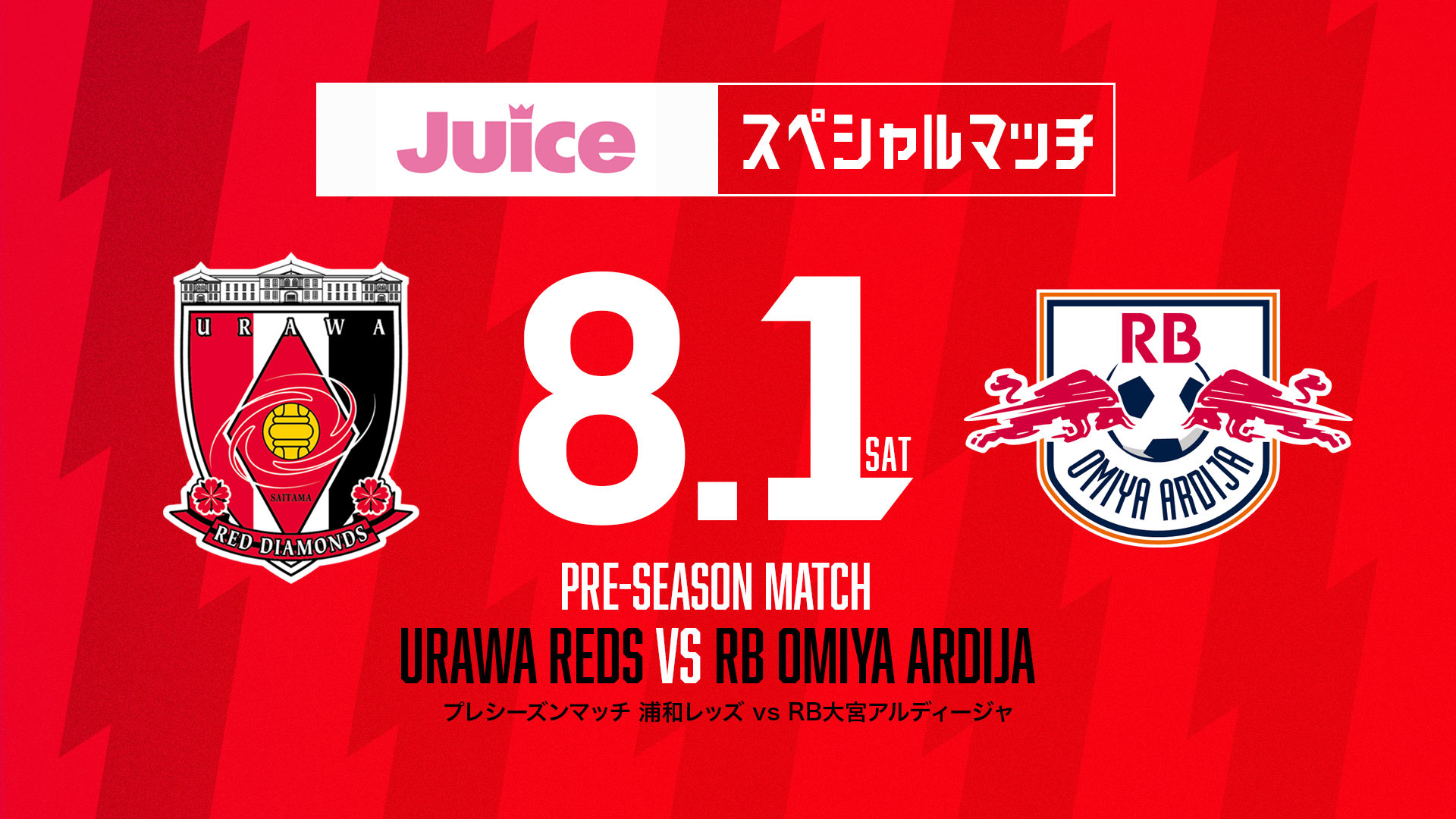
- Juice Special Match vs RB Omiya Ardija Trial Information
- We would like to inform you about Trial information for the 'Juice Special Match vs RB Omiya Ardija' which will be held at Saitama Stadium on August 1st (Sat).
-
- Juice Special Match vs RB Omiya Ardija Trial Results
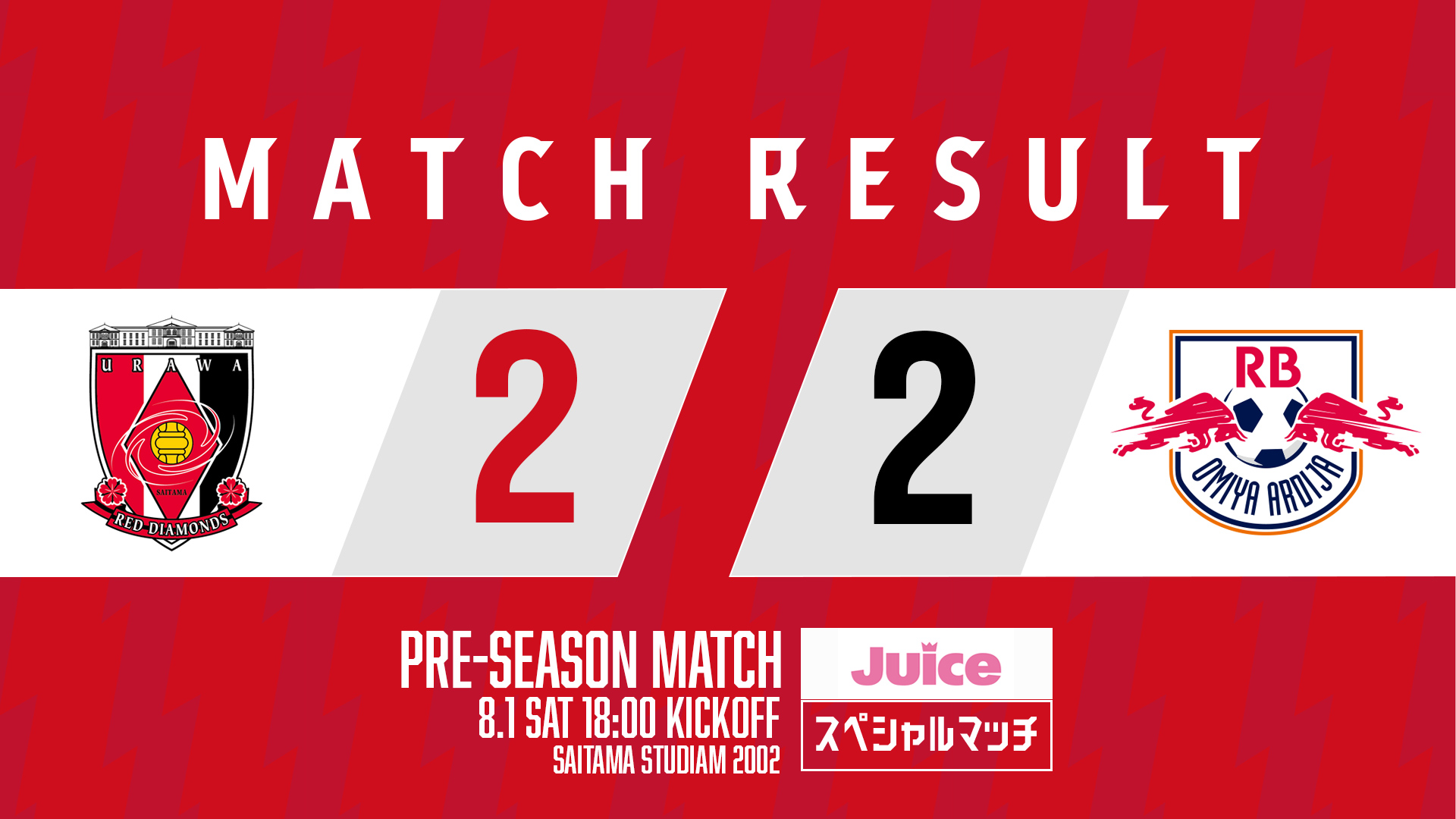
- We would like to inform you of the results of Trial 'Juice Special Match vs RB Omiya Ardija' held at Saitama Stadium on August 1st (Sat).
-
- 2026/27 Meiji Yasuda J1 League Matchday 2 vs Sanfrecce Hiroshima Trial Information
- Trial information for the 2026/27 Meiji Yasuda J1 League Matchday 2 vs Sanfrecce Hiroshima [MATCH PARTNER: Polus Group], to be held at Saitama Stadium (Sat), the 15th...







![Partner Sales Representative [Official] X](https://www.urawa-reds.co.jp/wp-content/themes/reds2019/img/banner/partner_x_bnr.jpg.jpg)