NEWS
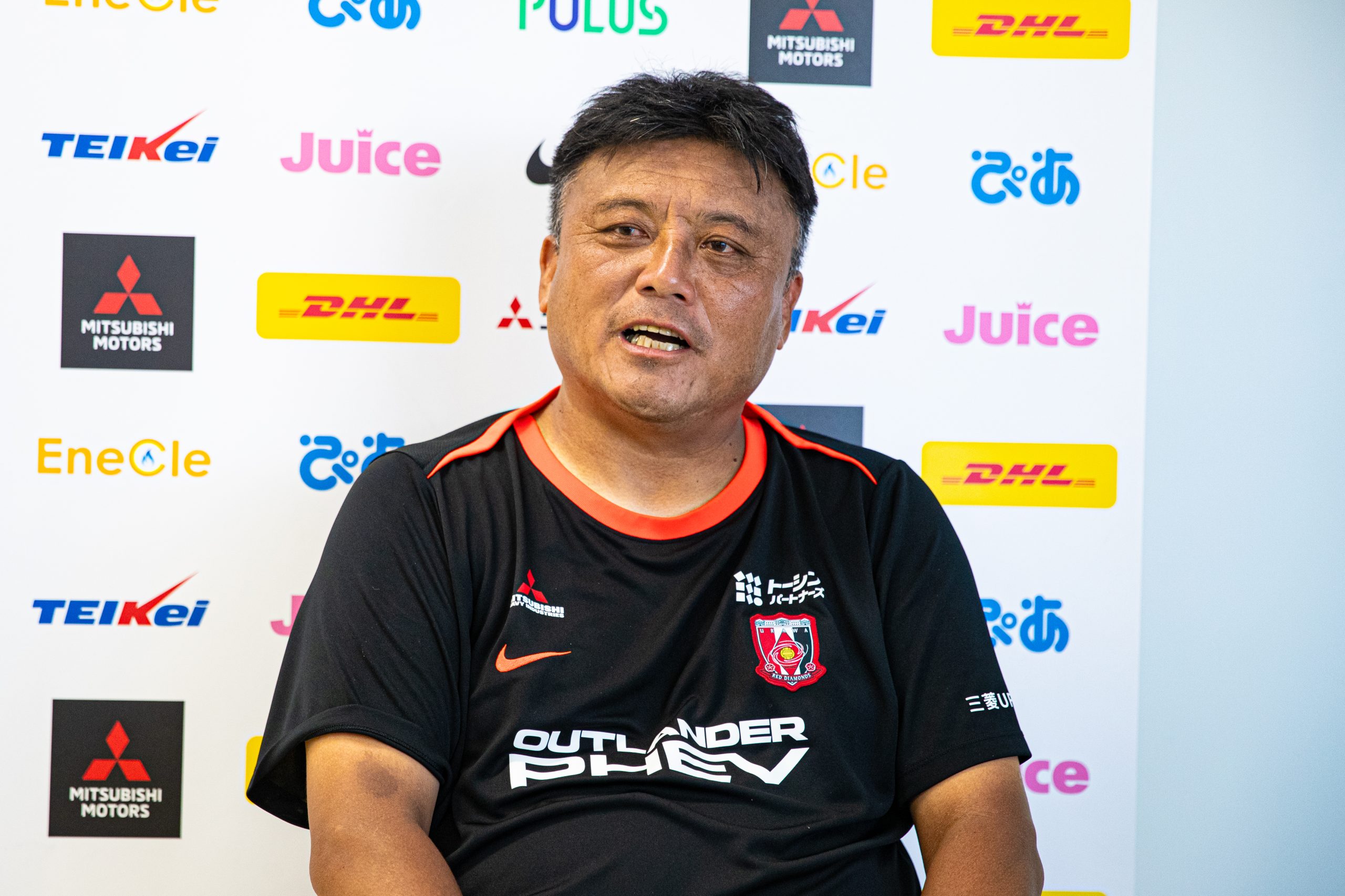
Manager Cho Kwi Jae jae at Okinawa training camp press conference: "To share the feeling of fighting together with the fans and supporters, passion and theory must coexist."
On the 23rd, Head Coach Cho Kwi Jae answered questions from the media regarding an overall review of the “2026/27 Season Summer Training Camp Supported by Juice,” currently being held in Kin Town, Okinawa Prefecture, as well as the team’s preparations leading up to the season opener.
(Summary of the matches against FC Ryukyu and Fujieda MYFC)
“We had a match against a university team (Trial) in between, followed by our first match against a J.League team (Trial) in Ryukyu, and then the match in Fujieda.Since both teams have similar playing styles, I felt it wouldn’t be quite right for us to impose strict tactical restrictions from the start and stifle the players’ natural energy and dynamism. So, for the first one or two Trial, I kept tactical instructions to a minimum, in a sense, and experimented with various player combinations.
As for what we needed to work on right now, the match against Ryukyu Trial helped us narrow down our focus to a certain extent, so I believed we needed to make adjustments during that period and use the Fujieda match to get a sense of our progress in those areas before moving on to the next step.
Although I haven’t had much time since becoming head coach leading up to this fall-spring season, I felt that if we had focused entirely on tactical aspects from the very start of the preseason, we wouldn’t have any room for growth once the season began. In that sense, by reviewing what we were able to work on and what didn’t go quite as planned in the match against Ryukyu (Trial),in the match against Fujieda (Trial), we saw improvements in those areas, but there are still things we need to work on, such as “how we score goals” and “how to prevent the opponent from penetrating our defense.”From here on out, we’ll continue to Trial practice Trial, and as we play a preseason match against RB Omiya Ardija one week before the season opener, I believe that—even with heat acclimatization—we face another major rival besides our opponents, given that it’s expected to be even hotter in Urawa than it was in Okinawa.
However, the high-intensity training we’ve built up here will allow us to play 3,4 Trial—we’ll have to play in those conditions—but I want us to be in a better position than other teams to build on our tactics as we move into fall and winter. We’re currently preparing to get off to a strong start, and then use that momentum to help the team grow even further; that’s the approach we’re taking right now.
I’m not sure if this fully answers your question, but regarding that approach—or rather, our objectives for Trial—in the matches against Ryukyu and Fujieda Trial, there was a sense that we approached them a little differently, though I wouldn’t call it a major change.”
(Regarding the preseason match against RB Omiya Ardija, was that incorporated into your planning as part of your preparations for the J.League season opener?)
“Of course, since it’s a public match Trial, it serves as a way to introduce ourselves to our fans and supporters, and there’s also the aspect of exposing ourselves to our opponents. However, I want to approach this season—and this goes without saying—with the premise of first asking, ‘Where do we stand?’I don’t think it’s necessarily good for this team to change our philosophy or our core concept just based on scouting the opponent or other factors.
With this “Trial” taking place a week before the season opener—and while there are both pros and cons—I want to run various simulations to maximize the benefits of this opportunity and prepare for our opening match against Gamba Osaka.
While there’s an element of information warfare involved, what matters more is how we can play. Being able to do that at Saitama Stadium—which, in a sense, demands something new from both me and the players—is a stage that boosts our motivation, and I view it positively.”
(There was talk about having to play Trial in the heat early in the season. While Coach Cho’s approach is consistent, are there any plans to adjust for the heat or change the way you play?)
“It’s not quite as extensive as a hydration break, but we do have water breaks. Considering those breaks, summer Trial games tend to follow a four-quarter format Trial. I’ve experienced that both at Kyoto Sanga F.C. and Shonan Bellmare.
First of all, I think how we handle the start of Trial is extremely important during the summer. Looking at the data, the periods between 45 and 60 minutes, or 60 and 75 minutes, are times when the number of decelerations and accelerations, as well as sprint distance, tend to drop for both teams. However, it’s generally not the case that only our team’s performance drops while the opponent’s doesn’t—or vice versa.That’s precisely why taking control right from the start of the game is so crucial during the summer. If we can get the upper hand early on, it becomes much easier to close out the game by scoring a second and third goal. In the summer, in particular, we shouldn’t be in a situation where the first half is a complete disaster and we try to suddenly ramp up the intensity in the second half.We need to ensure the players understand this aspect of game management. Even if we concede a goal—which is, of course, to be expected—we must prevent the opponent from scoring a second and third goal in quick succession. Watching the FIFA World Cup reaffirmed this for me.
However, I don’t think it’s wise—both in terms of the style of play we aim for and in terms of racking up wins—to adopt a strategy in the summer where we’re just slow starters and spend the game feeling out our opponents.
Of course, there are countless ways to approach a game, but I want to strike a balance between what we absolutely must stick to—regardless of the summer heat—and the situations where we need to adapt.”
(During the short training camp, I think we saw some of Urawa Reds ’s past bad habits and quirks. What approach are you taking to steer those in a positive direction?)
“Since that was exactly what former head coach Maciej, who led the team until last season, was trying to do, it would be disrespectful to label them as ‘bad habits,’ and I certainly don’t think of them that way.
However, since we’re just getting started, when discussing what we can do to increase our chances of scoring or, conversely, reduce the likelihood of conceding goals—and since players generally find it easier to grasp the idea of increasing their scoring chances—I used data to discuss that today as well. We talked about where we stand and what we should be doing.—so while there will naturally be cases where what was previously considered acceptable is now replaced by “this instead” based on my suggestions, in any case, I’m not trying to create a new style per se. As Urawa Reds, I’m tailoring our approach to these players’ strengths, working with the club to determine the best course of action, and ensuring we “share the spirit of fighting alongside our fans and supporters”—I believe passion and theory must coexist in that regard, and I intend to build that together with the players right now. Setting aside whether there were bad habits or not, I do believe that within the path we should take, we must focus on how to strive forward and ensure we don’t go in the wrong direction.”
(How has the training camp been going so far?)
“People often say, ‘We’re starting with a small squad,’ but having spent a long time in Germany—and in Europe, where the existence of a reserve team is the norm—there are usually around 22 or 23 field players, and within that group, players come and go as they move between clubs.
Since Japan has a U-23 team, I don’t think the situations are entirely comparable, but I don’t think the current players’ enthusiasm or their determination to ‘change this team’ is lacking in the slightest. I can also imagine that starting with this small group of players is something that hasn’t happened very often in recent years at Urawa Reds.Right now, “competition” is emerging in various positions, and it’s not just competition to get on the field at Trial—it’s competition to play in Trial and help the team win. I think we’re seeing that kind of high-level competition right now. If someone scores in your position, or if someone else in your position performs well, naturally there’s a more vivid reaction than ever before.That’s essential for the team, so I don’t plan to finalize the roster until the day before the game. I believe that the players’ current mindset—coming together with the determination to “go for it” right up until the roster is announced three hours before the season opener—is more important than any tactical plan we could devise. I want to make sure we don’t lose that momentum.”
(Watching the training sessions since the start of camp, the grid has been tight relative to the number of players, and the intensity is such that physical battles are inevitable. As a spectator, I was worried that injuries might occur, but so far, there haven’t been any major injuries. Are you managing to increase the physicality and intensity while avoiding injuries, just as you intended?)
“It goes without saying, but right now I’m telling them, ‘Please wear your shin guards.’ That’s to prevent unnecessary injuries—when players collide in such a confined space, bruises and the like are bound to happen. I’ve explained this myself and taken precautions to ensure we don’t lose players to accidental injuries.Since today isn’t a practice match against an opponent, the reason most players aren’t wearing shin guards is simply because I told them beforehand, ‘You don’t need them.’ I’m trying to ensure the players understand the appropriate context for when to wear them.
If you watch Liverpool FC or AFC Bournemouth’s preseason, you’ll see that nobody is wearing shin guards, but I don’t think it’s right to just copy that aspect and apply it to our team, assuming, “It’s okay.”After all, we have to call out what’s necessary when it’s necessary. In possession drills on a small field, there are things we gain and things we lose; so deciding how to open up space and what kind of drills to do comes down to balancing the magnitude of what we lose against what we gain. I don’t think there’s ever a drill where the gain is 100 and the loss is 0, soRight now, I have to assess the situation on a case-by-case basis—deciding when and what kind of practice is needed, whether we need a rest day, a session like today’s, or a match. That’s something I have to decide by reading the room each time, and that’s the job of a coach. If we were just to carry out predetermined plans exactly as they are, I feel that would be a bit different from the approach I’m taking as coach.
Right now, rather than focusing on winning the next “Trial,” I’m spending every moment agonizing over how to structure our daily practices right up to the last minute. Even today, we had a staff meeting early in the morning where the phrase “What should we do?” came up about 200 times.
We have some truly excellent staff members, so when it comes to deciding how far to go and what to do—for example, today’s final shooting drill was something I decided on the spot—but even with that in mind, players are living beings. It’s easy to fall into the trap of thinking, “We won with this drill last week, so let’s do it again this week,” but I don’t think that way. I believe we have to decide where to draw that fine line by talking with the players and seeing how things go.”
(Speaking of what we gain and what we lose, recently at Urawa Reds, we might have been a bit too preoccupied with things like, “We haven’t been beaten here,” or similar concerns. Rather than that, is there a focus on what we ourselves want to do first?)
“If we look at the data from the past year—including the ‘100-Year Vision League’—the statistics show that Urawa Reds doesn’t actually gain possession very often in the opponent’s half or near the midfield, rather than in our own half. In fact, we rank about fifth from the bottom in that category.
However, as I mentioned earlier, if the team thinks that’s a good strategy, then it’s a good number; if the team says it’s not good, then it’s not good. But personally, to beat Trial, I want to increase that number of ball gains.So, I’m not saying it’s bad—that’s just the current reality—but if we increase that number, the probability of getting a shot on goal or entering the penalty area—which is currently about 15 percent after a ball win—would rise to 20 percent. If that happens, we’d be at the top of the league in terms of the number of times we enter the penalty area.
That doesn’t require a 50 percent effort—just a 5 percent one—so rather than completely changing our approach, we can definitely reach that goal simply by staying focused and not slacking off on the little details and support.That’s why I don’t want to talk about winning the championship or the ACL (AFC Champions League) at this point—if we don’t keep focusing on that 5 percent needed to change the reality right in front of us in order to get closer to those goals, we’ll absolutely never reach them. Urawa Reds If we’re always going to talk about “fulfilling Urawa’s responsibility and winning the title as Urawa”—which sounds like a pipe dream—I believe we first need to face our current reality head-on and make the effort to change that reality by 5 percent. It’s not something to make a big deal out of, but I’ve been reminding the players of this from time to time during this training camp.”
(Yuta Miyamoto mentioned that during training back when he was at Kyoto Sanga F.C., they played game after game with high-pressure defense. He said that when he moved to Trial, the opponent’s press felt slow—that’s how much they’d practiced it. When you heard that, did you feel that was the true value of their training?)
“Well, I think he might be exaggerating a bit (laughs). It’s not like we’re doing nothing but high-pressing drills all the time, but there’s no doubt that it builds that kind of confidence.(Yuta) Miyamoto also gained confidence from the year he spent playing in Kyoto, and even in the recent match against Fujieda Trial, he showed a lot of composure in a good way. Of course, it’s better for the players to feel that ‘Trial is easier than what we did in practice.’
It’s not that things we haven’t practiced won’t come up—I think the more accurate way to put it is that what we’ve experienced in practice shapes how we approach Trial and makes the workload feel easier. Of course, it’s only been a little over two weeks since we started training, so not everything has changed yet, butI think that compared to my very first practice at Saitama Stadium after I arrived, the players’ understanding of what’s important—and the way they express it—has shifted, as reflected in the words each player uses when giving interviews like this.”
(Kota Mizunuma ’s encouragement was quite noticeable early on—what about the level of mutual support among the players?)
“That’s a really difficult question. If you ask whether a team is good just because everyone is talking in the locker room, the answer is no.However, when I ask coaches who were with us until last year, I hear that discussing things as much as we do at halftime wasn’t that common until last year. But I don’t necessarily think talking is always a good thing—it depends on the situation. Still, if we want to win, we need to talk, and if we want to improve, we need to push each other.I don’t think a team that’s constantly making a lot of noise is necessarily a good team. Ultimately, the best scenario is when the team improves in the second half without saying a word. That way, the opponent doesn’t catch on, and the players have already sorted things out by the time the coach speaks. But since we can’t do that, I don’t think we can simply dismiss it with a comment like, ‘We gained momentum.’”
(Compared to Kyoto and Shonan, which you’ve coached in the past, Urawa Reds has a different historical background and foundation. What are the unique challenges and rewards of coaching Urawa Reds?)
“I’ve only recently become head coach, and since I haven’t Trial yet, I think it would be ridiculous for me to go on and on about all the rewards and challenges myself, butI was part of this team for a while, and even back then there were plenty of fans and supporters. But then Saitama Stadium was built, and seeing the crowd more than double—even while I was with another team—made me think, ‘That’s really something.’
It’s partly because it’s bigger than places like Kyoto or Shonan, but I feel that we’ve become a central part of people’s daily lives there—the size of the fan base and the level of attention we receive are immense. That said, I’m not going to change the way I work just because of that, but to truly live up to the expectations of those people—as I told the players the other day—‘If our fans and supporters really sang songs before the match starts, just like at Anfield Trial, and the kickoff whistle blew the moment the singing stopped, the opposing team would feel almost no chance of winning.To create that atmosphere, we have no choice but to show it through our play.” That’s not just about scoring or preventing goals—the weight of every single play and running until the very end are absolutely essential.
But if we can become a team that truly elicits that kind of response from our fans and supporters from the bottom of their hearts, I believe we’ll undoubtedly become a strong and tough team to face. Since arriving here, I’ve come to realize anew that this is a team with plenty of that raw talent and potential.I want to build a team that raises the bar for what people expect and fights alongside our fans and supporters. And while this isn’t about comparing us to Kyoto or Shonan, even in this short time, I’ve sensed—in a positive way—that this is a team with a very large fan base.”
[Urawa Reds Official Media (URD:OM)]
(Summary of the matches against FC Ryukyu and Fujieda MYFC)
“We had a match against a university team (Trial) in between, followed by our first match against a J.League team (Trial) in Ryukyu, and then the match in Fujieda.Since both teams have similar playing styles, I felt it wouldn’t be quite right for us to impose strict tactical restrictions from the start and stifle the players’ natural energy and dynamism. So, for the first one or two Trial, I kept tactical instructions to a minimum, in a sense, and experimented with various player combinations.
As for what we needed to work on right now, the match against Ryukyu Trial helped us narrow down our focus to a certain extent, so I believed we needed to make adjustments during that period and use the Fujieda match to get a sense of our progress in those areas before moving on to the next step.
Although I haven’t had much time since becoming head coach leading up to this fall-spring season, I felt that if we had focused entirely on tactical aspects from the very start of the preseason, we wouldn’t have any room for growth once the season began. In that sense, by reviewing what we were able to work on and what didn’t go quite as planned in the match against Ryukyu (Trial),in the match against Fujieda (Trial), we saw improvements in those areas, but there are still things we need to work on, such as “how we score goals” and “how to prevent the opponent from penetrating our defense.”From here on out, we’ll continue to Trial practice Trial, and as we play a preseason match against RB Omiya Ardija one week before the season opener, I believe that—even with heat acclimatization—we face another major rival besides our opponents, given that it’s expected to be even hotter in Urawa than it was in Okinawa.
However, the high-intensity training we’ve built up here will allow us to play 3,4 Trial—we’ll have to play in those conditions—but I want us to be in a better position than other teams to build on our tactics as we move into fall and winter. We’re currently preparing to get off to a strong start, and then use that momentum to help the team grow even further; that’s the approach we’re taking right now.
I’m not sure if this fully answers your question, but regarding that approach—or rather, our objectives for Trial—in the matches against Ryukyu and Fujieda Trial, there was a sense that we approached them a little differently, though I wouldn’t call it a major change.”
(Regarding the preseason match against RB Omiya Ardija, was that incorporated into your planning as part of your preparations for the J.League season opener?)
“Of course, since it’s a public match Trial, it serves as a way to introduce ourselves to our fans and supporters, and there’s also the aspect of exposing ourselves to our opponents. However, I want to approach this season—and this goes without saying—with the premise of first asking, ‘Where do we stand?’I don’t think it’s necessarily good for this team to change our philosophy or our core concept just based on scouting the opponent or other factors.
With this “Trial” taking place a week before the season opener—and while there are both pros and cons—I want to run various simulations to maximize the benefits of this opportunity and prepare for our opening match against Gamba Osaka.
While there’s an element of information warfare involved, what matters more is how we can play. Being able to do that at Saitama Stadium—which, in a sense, demands something new from both me and the players—is a stage that boosts our motivation, and I view it positively.”
(There was talk about having to play Trial in the heat early in the season. While Coach Cho’s approach is consistent, are there any plans to adjust for the heat or change the way you play?)
“It’s not quite as extensive as a hydration break, but we do have water breaks. Considering those breaks, summer Trial games tend to follow a four-quarter format Trial. I’ve experienced that both at Kyoto Sanga F.C. and Shonan Bellmare.
First of all, I think how we handle the start of Trial is extremely important during the summer. Looking at the data, the periods between 45 and 60 minutes, or 60 and 75 minutes, are times when the number of decelerations and accelerations, as well as sprint distance, tend to drop for both teams. However, it’s generally not the case that only our team’s performance drops while the opponent’s doesn’t—or vice versa.That’s precisely why taking control right from the start of the game is so crucial during the summer. If we can get the upper hand early on, it becomes much easier to close out the game by scoring a second and third goal. In the summer, in particular, we shouldn’t be in a situation where the first half is a complete disaster and we try to suddenly ramp up the intensity in the second half.We need to ensure the players understand this aspect of game management. Even if we concede a goal—which is, of course, to be expected—we must prevent the opponent from scoring a second and third goal in quick succession. Watching the FIFA World Cup reaffirmed this for me.
However, I don’t think it’s wise—both in terms of the style of play we aim for and in terms of racking up wins—to adopt a strategy in the summer where we’re just slow starters and spend the game feeling out our opponents.
Of course, there are countless ways to approach a game, but I want to strike a balance between what we absolutely must stick to—regardless of the summer heat—and the situations where we need to adapt.”
(During the short training camp, I think we saw some of Urawa Reds ’s past bad habits and quirks. What approach are you taking to steer those in a positive direction?)
“Since that was exactly what former head coach Maciej, who led the team until last season, was trying to do, it would be disrespectful to label them as ‘bad habits,’ and I certainly don’t think of them that way.
However, since we’re just getting started, when discussing what we can do to increase our chances of scoring or, conversely, reduce the likelihood of conceding goals—and since players generally find it easier to grasp the idea of increasing their scoring chances—I used data to discuss that today as well. We talked about where we stand and what we should be doing.—so while there will naturally be cases where what was previously considered acceptable is now replaced by “this instead” based on my suggestions, in any case, I’m not trying to create a new style per se. As Urawa Reds, I’m tailoring our approach to these players’ strengths, working with the club to determine the best course of action, and ensuring we “share the spirit of fighting alongside our fans and supporters”—I believe passion and theory must coexist in that regard, and I intend to build that together with the players right now. Setting aside whether there were bad habits or not, I do believe that within the path we should take, we must focus on how to strive forward and ensure we don’t go in the wrong direction.”
(How has the training camp been going so far?)
“People often say, ‘We’re starting with a small squad,’ but having spent a long time in Germany—and in Europe, where the existence of a reserve team is the norm—there are usually around 22 or 23 field players, and within that group, players come and go as they move between clubs.
Since Japan has a U-23 team, I don’t think the situations are entirely comparable, but I don’t think the current players’ enthusiasm or their determination to ‘change this team’ is lacking in the slightest. I can also imagine that starting with this small group of players is something that hasn’t happened very often in recent years at Urawa Reds.Right now, “competition” is emerging in various positions, and it’s not just competition to get on the field at Trial—it’s competition to play in Trial and help the team win. I think we’re seeing that kind of high-level competition right now. If someone scores in your position, or if someone else in your position performs well, naturally there’s a more vivid reaction than ever before.That’s essential for the team, so I don’t plan to finalize the roster until the day before the game. I believe that the players’ current mindset—coming together with the determination to “go for it” right up until the roster is announced three hours before the season opener—is more important than any tactical plan we could devise. I want to make sure we don’t lose that momentum.”
(Watching the training sessions since the start of camp, the grid has been tight relative to the number of players, and the intensity is such that physical battles are inevitable. As a spectator, I was worried that injuries might occur, but so far, there haven’t been any major injuries. Are you managing to increase the physicality and intensity while avoiding injuries, just as you intended?)
“It goes without saying, but right now I’m telling them, ‘Please wear your shin guards.’ That’s to prevent unnecessary injuries—when players collide in such a confined space, bruises and the like are bound to happen. I’ve explained this myself and taken precautions to ensure we don’t lose players to accidental injuries.Since today isn’t a practice match against an opponent, the reason most players aren’t wearing shin guards is simply because I told them beforehand, ‘You don’t need them.’ I’m trying to ensure the players understand the appropriate context for when to wear them.
If you watch Liverpool FC or AFC Bournemouth’s preseason, you’ll see that nobody is wearing shin guards, but I don’t think it’s right to just copy that aspect and apply it to our team, assuming, “It’s okay.”After all, we have to call out what’s necessary when it’s necessary. In possession drills on a small field, there are things we gain and things we lose; so deciding how to open up space and what kind of drills to do comes down to balancing the magnitude of what we lose against what we gain. I don’t think there’s ever a drill where the gain is 100 and the loss is 0, soRight now, I have to assess the situation on a case-by-case basis—deciding when and what kind of practice is needed, whether we need a rest day, a session like today’s, or a match. That’s something I have to decide by reading the room each time, and that’s the job of a coach. If we were just to carry out predetermined plans exactly as they are, I feel that would be a bit different from the approach I’m taking as coach.
Right now, rather than focusing on winning the next “Trial,” I’m spending every moment agonizing over how to structure our daily practices right up to the last minute. Even today, we had a staff meeting early in the morning where the phrase “What should we do?” came up about 200 times.
We have some truly excellent staff members, so when it comes to deciding how far to go and what to do—for example, today’s final shooting drill was something I decided on the spot—but even with that in mind, players are living beings. It’s easy to fall into the trap of thinking, “We won with this drill last week, so let’s do it again this week,” but I don’t think that way. I believe we have to decide where to draw that fine line by talking with the players and seeing how things go.”
(Speaking of what we gain and what we lose, recently at Urawa Reds, we might have been a bit too preoccupied with things like, “We haven’t been beaten here,” or similar concerns. Rather than that, is there a focus on what we ourselves want to do first?)
“If we look at the data from the past year—including the ‘100-Year Vision League’—the statistics show that Urawa Reds doesn’t actually gain possession very often in the opponent’s half or near the midfield, rather than in our own half. In fact, we rank about fifth from the bottom in that category.
However, as I mentioned earlier, if the team thinks that’s a good strategy, then it’s a good number; if the team says it’s not good, then it’s not good. But personally, to beat Trial, I want to increase that number of ball gains.So, I’m not saying it’s bad—that’s just the current reality—but if we increase that number, the probability of getting a shot on goal or entering the penalty area—which is currently about 15 percent after a ball win—would rise to 20 percent. If that happens, we’d be at the top of the league in terms of the number of times we enter the penalty area.
That doesn’t require a 50 percent effort—just a 5 percent one—so rather than completely changing our approach, we can definitely reach that goal simply by staying focused and not slacking off on the little details and support.That’s why I don’t want to talk about winning the championship or the ACL (AFC Champions League) at this point—if we don’t keep focusing on that 5 percent needed to change the reality right in front of us in order to get closer to those goals, we’ll absolutely never reach them. Urawa Reds If we’re always going to talk about “fulfilling Urawa’s responsibility and winning the title as Urawa”—which sounds like a pipe dream—I believe we first need to face our current reality head-on and make the effort to change that reality by 5 percent. It’s not something to make a big deal out of, but I’ve been reminding the players of this from time to time during this training camp.”
(Yuta Miyamoto mentioned that during training back when he was at Kyoto Sanga F.C., they played game after game with high-pressure defense. He said that when he moved to Trial, the opponent’s press felt slow—that’s how much they’d practiced it. When you heard that, did you feel that was the true value of their training?)
“Well, I think he might be exaggerating a bit (laughs). It’s not like we’re doing nothing but high-pressing drills all the time, but there’s no doubt that it builds that kind of confidence.(Yuta) Miyamoto also gained confidence from the year he spent playing in Kyoto, and even in the recent match against Fujieda Trial, he showed a lot of composure in a good way. Of course, it’s better for the players to feel that ‘Trial is easier than what we did in practice.’
It’s not that things we haven’t practiced won’t come up—I think the more accurate way to put it is that what we’ve experienced in practice shapes how we approach Trial and makes the workload feel easier. Of course, it’s only been a little over two weeks since we started training, so not everything has changed yet, butI think that compared to my very first practice at Saitama Stadium after I arrived, the players’ understanding of what’s important—and the way they express it—has shifted, as reflected in the words each player uses when giving interviews like this.”
(Kota Mizunuma ’s encouragement was quite noticeable early on—what about the level of mutual support among the players?)
“That’s a really difficult question. If you ask whether a team is good just because everyone is talking in the locker room, the answer is no.However, when I ask coaches who were with us until last year, I hear that discussing things as much as we do at halftime wasn’t that common until last year. But I don’t necessarily think talking is always a good thing—it depends on the situation. Still, if we want to win, we need to talk, and if we want to improve, we need to push each other.I don’t think a team that’s constantly making a lot of noise is necessarily a good team. Ultimately, the best scenario is when the team improves in the second half without saying a word. That way, the opponent doesn’t catch on, and the players have already sorted things out by the time the coach speaks. But since we can’t do that, I don’t think we can simply dismiss it with a comment like, ‘We gained momentum.’”
(Compared to Kyoto and Shonan, which you’ve coached in the past, Urawa Reds has a different historical background and foundation. What are the unique challenges and rewards of coaching Urawa Reds?)
“I’ve only recently become head coach, and since I haven’t Trial yet, I think it would be ridiculous for me to go on and on about all the rewards and challenges myself, butI was part of this team for a while, and even back then there were plenty of fans and supporters. But then Saitama Stadium was built, and seeing the crowd more than double—even while I was with another team—made me think, ‘That’s really something.’
It’s partly because it’s bigger than places like Kyoto or Shonan, but I feel that we’ve become a central part of people’s daily lives there—the size of the fan base and the level of attention we receive are immense. That said, I’m not going to change the way I work just because of that, but to truly live up to the expectations of those people—as I told the players the other day—‘If our fans and supporters really sang songs before the match starts, just like at Anfield Trial, and the kickoff whistle blew the moment the singing stopped, the opposing team would feel almost no chance of winning.To create that atmosphere, we have no choice but to show it through our play.” That’s not just about scoring or preventing goals—the weight of every single play and running until the very end are absolutely essential.
But if we can become a team that truly elicits that kind of response from our fans and supporters from the bottom of their hearts, I believe we’ll undoubtedly become a strong and tough team to face. Since arriving here, I’ve come to realize anew that this is a team with plenty of that raw talent and potential.I want to build a team that raises the bar for what people expect and fights alongside our fans and supporters. And while this isn’t about comparing us to Kyoto or Shonan, even in this short time, I’ve sensed—in a positive way—that this is a team with a very large fan base.”
[Urawa Reds Official Media (URD:OM)]
Related article
-

- Announcement of the appointment of Mr. Cho Kwi-jae as manager
- We are pleased to announce that Mr. Cho Kwi-jae has been appointed as the head coach of the first team, effective from the 2026/27 season.
-
- Press conference announcing the appointment of manager Cho Kwi-jae
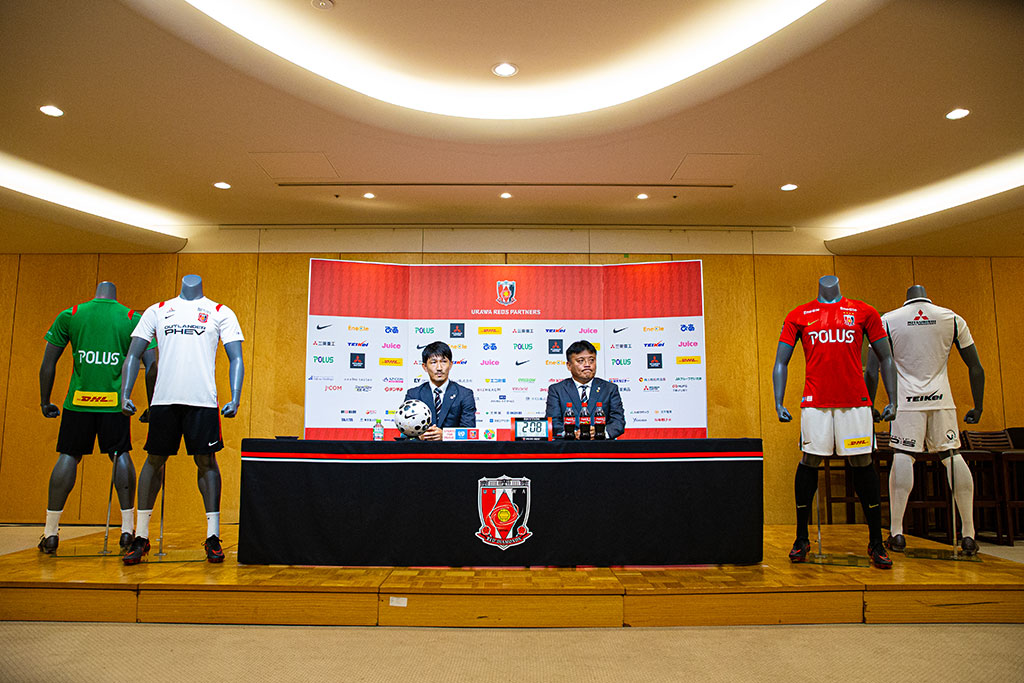
- On July 5th, at the "REDS START DAY 2026/27" held at Saitama Stadium, a press conference was held to announce the appointment of manager Cho Kwi-jae.
-
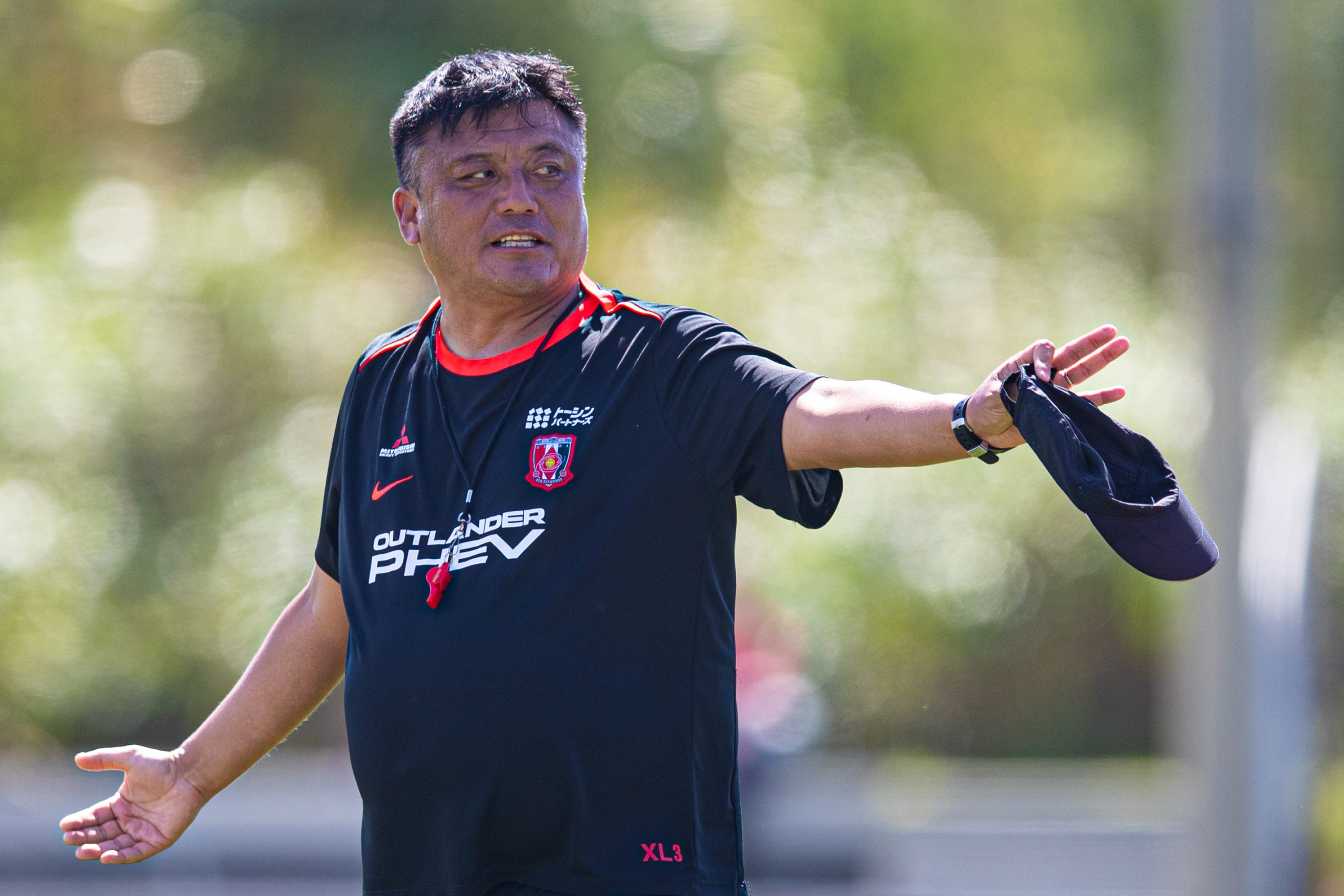
- Manager Cho Kwi-jae, speaking to reporters at the Okinawa training camp: "We will use this camp to build a team that can take the lead in all situations and approach each game with confidence."
- On the 15th, manager Cho Kwi Jae jae spoke about his impressions so far of the "2026/27 Season Summer Training Camp Supported by Juice," currently being held in Kin Town, Okinawa Prefecture...
-
- Regarding the start of the 2026/27 season for the top team
- We would like to inform you of the start of the first team's activities for the 2026/27 season as follows.
-
- Announcement of Shun Yoshida 's permanent transfer to Fujieda MYFC
- We would like to announce that Shun Yoshida (29 years old) will be making a permanent transfer to Fujieda MYFC.
-
- Announcement of Toshikazu Teruuchi 's developmental loan transfer to FC Ryukyu
- We would like to announce that Toshikazu Teruuchi (19 years old) will be joining FC Ryukyu on a developmental loan.
-
- Announcement of Ryusei Sato 's developmental loan transfer to Montedio Yamagata
- We would like to announce that Ryusei Sato (22 years old) will be joining Montedio Yamagata on a developmental loan.
-
- Announcement Regarding the Expiration of Hiroki Abe Abe's Contract
- We would like to inform you that player Hiroki Abe (27 years old) will be leaving the team at the end of this season due to the expiration of his contract.





![Partner Sales Representative [Official] X](https://www.urawa-reds.co.jp/wp-content/themes/reds2019/img/banner/partner_x_bnr.jpg.jpg)