NEWS
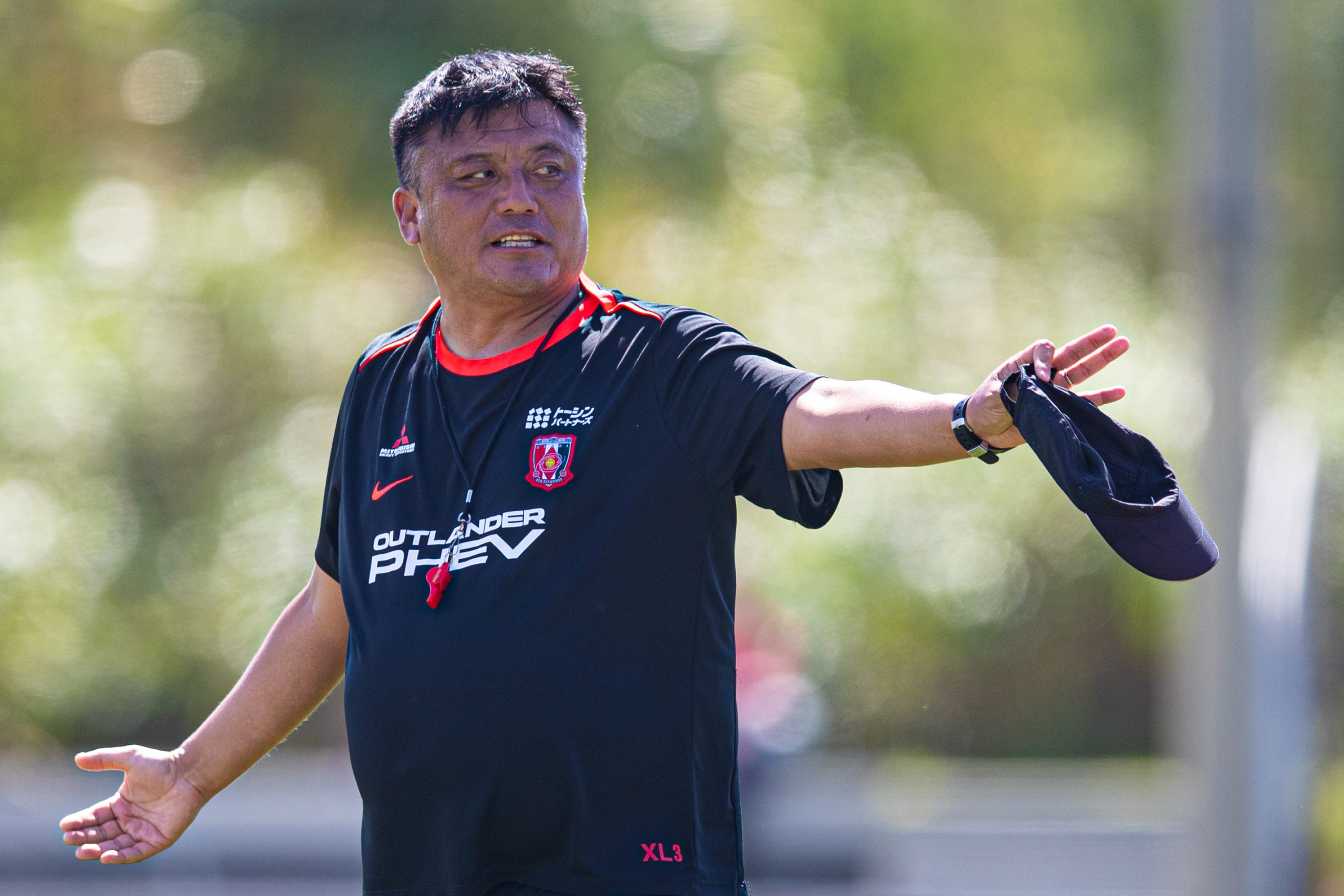
Manager Cho Kwi-jae, speaking to reporters at the Okinawa training camp: "We will use this camp to build a team that can take the lead in all situations and approach each game with confidence."
On the 15th, Head Coach Cho Ki-jae answered questions from the media regarding his impressions so far of the “2026/27 Season Summer Training Camp Supported by Juice,” which is currently being held in Kin Town, Okinawa Prefecture.
(It’s starting to feel like typical Okinawan summer—how has the camp been going so far?)
“Personally, this is my first time holding a summer camp in Okinawa. While other clubs tend to head to Europe during the off-season, by the time my appointment as head coach was finalized, Okinawa had already been more or less decided upon. I believe we must make the most of the benefit of being able to maintain our focus even in this hot weather during the upcoming season.We’re focusing on tactical aspects—particularly what to do when the opponent has the ball—but beyond that, we’re using this camp to build the confidence needed to take control of the game in every situation, whether we’re taking a throw-in or in possession ourselves.
I feel that the players are fully committed to meeting expectations that go beyond what has been asked of them so far. Of course, there are still areas where we fall short, and our squad may be smaller compared to other teams, but I feel very positive about taking on the J1 League with the players we have right now.”
(Regarding our pressing strategy—we’re working on moving forward as a unit—how are things going in terms of coordination, spacing, and decision-making?)
“Of course, once the game starts, we’ll need to make various fine adjustments based on our analysis of the opponent, but the philosophy of pressing even when the opponent has the ball isn’t something I came up with on my own.In the current FIFA World Cup, due to the heat in the U.S. and other factors, almost no teams have been implementing that approach from the very start. However, when I look at European leagues with their spring-and-fall seasons, I see that teams prioritizing this style are leading the league standings—I believe we’ve entered an era where that’s the norm.The Reds haven’t been able to compete for the top spots or the championship in recent years, but I don’t think the players’ mindset will be refreshed unless we develop a unique, positive characteristic that sets us apart. In a sense, I believe their ability in that area is actually very high.”
(It’s not just about winning the ball back—it’s about taking control, preventing the opponent from playing as they wish, and dominating the game as a whole. At this early stage, do you think the players have the right mindset and instinct for this?)
“That’s right. I don’t think I’m the first person to say this. The goal isn’t just to apply pressure; having a lot of players in the central areas—where the pressure is applied—is one of the benefits. It makes it easier to find open teammates afterward, and if we can score there, we start with a 1-0 or 2-0 lead.
As I’ve told the players, the days of playing a 0-0 first half to size things up, then bringing in substitutes to score the winning goal in the second half when the opponent’s legs have gone cold—those days are over.Personally, I believe that unless a team can take the initiative from the first half onward, it’s very difficult to win the league. Mentally, we need to be aggressive while minimizing the risk of conceding goals as much as possible, and it’s important for the whole team to share that mindset. I really think the players are putting in a great effort.”
(Does that mean you’re focusing on defense now precisely because you’re playing aggressively?)
“When we analyzed last year’s data, we found that the Reds took a significantly longer time than most teams in the league to get from winning the ball to taking a shot. Of course, holding onto the ball for a minute or two to completely break down the opponent’s defense before shooting is part of soccer, but statistically speaking, those kinds of goals aren’t very common.After all, the probability of scoring increases if we attack before the opponent can get organized. However, this doesn’t mean ‘don’t hold onto the ball.’ I believe that unless the players understand what our top priority is and then focus on the second and third priorities, it won’t lead to the team’s scoring ability. I think we can gradually change the players’ mindset in that regard, layer by layer.”
(Regarding defensive practice, looking back at past coaches, I’ve often seen situations where the team is outnumbered—tough scenarios where the defensive side has fewer players. Will this become a hallmark of Coach Cho’s philosophy?)
“If you’re defending when you’re outnumbered, it’s easier when you’re not, right? I believe there are ways to defend even when outnumbered, so in practice, we work on improving that—Trial—so that, in a sense, it becomes easier, or rather, so that those skills can be put to use. That’s what practice is all about.
In a positive sense, I think it’s better for the team to build itself up through various mistakes made during practice and Trial. It’s not just about winning or losing in practice Trial—there’s no doubt we’re here to build on those experiences. Right now, we don’t even know who will play, and I think that kind of competition is something that’s changing for both the staff and the players, so I want to cherish that atmosphere.”
(With the lineup still uncertain, you’re having some players challenge themselves at multiple positions to make the most of their versatility. What’s your feedback on that, and what’s your goal?)
“Personally, there are certain roles I’d like to see them try, and the players themselves have positions they’d like to play. But right now, rather than just experimenting, I see it as adjusting positions to leverage the team’s strengths. In that sense, there have been more moments where players surprise us by showing, ‘Oh, they can do this too.’It’s definitely not about playing soccer based solely on a set system; there are times when we have to think in a piecemeal way—1 Trial 1 Trial—about which players to use and how to play to pose the greatest threat to our opponents.
The common mindset of “Since we won the last game Trial, this lineup Trial is set for the next one” isn’t wrong, but I’ve always approached things by aiming to build a team that’s even stronger for the next match Trial than the last, and I don’t want to eliminate that element when playing for the Reds either.“Right now, the starting lineup hasn’t been decided at all, and I know it’ll be tough to figure out the roster for the next practice Trial, but I want to make sure the players’ current motivation and enthusiasm don’t fade until the very end.”
(Regarding the strengths of Urawa Reds, what are your thoughts?)
“As I mentioned to the players recently, Kashima Antlers won the championship in the 2025 season for the first time in nine years, but during those nine years, they basically maintained a top-tier position—finishing 3rd, 2nd, 4th, and 5th—before finally winning the title. Urawa Reds, unfortunately, probably only finished in the top five once during those nine years. Of course, they did win the Emperor’s Cup and the ACL (AFC Champions League), but to climb to the top of the league—and while I can’t guarantee that things will improve just because I’ve become the manager—I believe this is a time when the current players need to develop a newfound sense of confidence. I think they have more than enough potential to give it their all and secure victories, so I hope—and intend to work toward—that their inherent technical skill, intelligence, and excellent teamwork will translate into a style of soccer that spectators perceive as aggressive.
Right now, if you ask me about the past strengths of Urawa Reds, I’m not really sure since I wasn’t there, but looking at the evolution and history of Pos, I personally don’t think that building on those foundations and adding new layers is at all inversely proportional to moving in a completely different direction. So, I want to proceed by making adjustments based on how the players are performing and what’s happening right in front of us.
The goal isn’t to press; winning is the ultimate objective. So I think the most important thing is to practice in ways that increase our chances of winning, whether we have the ball or not.
Spain made it to the World Cup final, but if you ask, “What’s Spain’s style?” they don’t pass the ball around as much as they used to. They do press high when they need to, but their defense is solid too. From my perspective, their defensive solidity stands out more than their individual attacking play. So if you ask, “What are Spain’s strengths?” it’s hard to pinpoint just one—it’s really everything.That “everything” doesn’t mean a colorless “everything”—I believe a team that can do everything with stability is ultimately strong. We’re still in the process of getting closer to that level, but if I were to tell the Reds players right now to “do everything,” I think they’d be completely lost. So one of my ideas is to first focus on these specific areas, develop our own identity, and then work on improving every aspect from there.”
(Ryoma Watanabe mentioned that Coach Cho told him, “Aim for the Japanese national team as your personal goal,” and he said he realized the importance of giving it a shot no matter his age. Is that kind of shift in mindset and awareness what’s crucial here?)
“It’s not just Ryoma (Watanabe), but seeing how he thinks and approaches things—though of course we can’t expect everything—I believe the ideal state for a club is for players to emerge from the Reds to the national team, for players to grow by playing the Reds’ style of soccer, and for that message to be passed on to younger players, creating a cycle that keeps things moving in many ways.To that end, I hope Ryoma doesn’t just do what he’s capable of in the next Trial match, but instead grows significantly—by a whole size or two—by challenging himself to reach new heights and experience things he hasn’t seen before. If that ultimately leads to a call-up to the national team, I think it would be wonderful for both the team and him personally.
Even including last season, he certainly doesn’t feel that he’s “already given it his all” during his time with the Reds so far. As a coach, I believe it’s only natural to set higher goals for each player, and while I don’t know whether he’ll ultimately be selected or not, I want him to always approach the game with that mindset.This applies not only to Ryoma but to all the players—including the U-21s, as well as the players who compete in the U-17 and U-19 leagues, as seen on Takeshi Wada. That’s how I feel.”
(During today’s practice, you were walking around all over the field, checking in with the coaches, trainers, and staff each time—have you been maintaining this style ever since your time at Shonan Bellmare?)
“I’m not sure if I’m walking around with any particular intention, but since we have such excellent staff now, I’m able to clearly distinguish between times when I’m taking the lead and times when I’m stepping back to observe the big picture. When I’m observing from a bird’s-eye view, I try to point out specific things I’ve noticed to individual players, whereas when I’m leading the whole group, I leave it up to their individual judgment.That said, I don’t think it’s a matter of my approach being right and someone else’s being wrong.But as long as I’m the head coach, I can’t just do what others say is “good”; I have to do what I personally think is “good” for it to resonate. And that “good” can’t just be a whim—it has to come from carefully analyzing my experience and various other factors. So, while I’m not necessarily moving forward with a specific plan in mind, I do believe I need to know my players well.”
(There are many coaches and staff members—what’s your perspective on the size of the staff?)
“Since the player roster seems small, it might look like there are just as many staff members as players—creating an atmosphere that feels like one-on-one, private coaching. But right now, if we want to improve the team, dividing up the work is extremely important. Currently, we have Nobu (Coach Nobuyasu Ikeda), Sako (Coach Masato Maesako), and Shio (Goalkeeper Coach Hitoshi Shiota),as well as our analytics staff—like Tomoki (Coach Tomoki Hasegawa, also in charge of analytics) and Kentaro (Kentaro Nagai, in charge of analytics)—are designing practices while discussing the trends and performance that Urawa Reds demonstrated up until last year. Including the integration with coaches who came from Kyoto Sanga F.C., things are going really well—it’s all going very smoothly.There are also staff members like me and Sugi (Coach Koichi Sugiyama) who were originally with the Reds, so in that sense, there are enough of us that there aren’t two people sitting around with nothing to do. For the players, it really feels like they’re being watched all the time, everywhere—it’s an atmosphere where we can’t take our eyes off them.
To be honest, I don’t think that’s ideal. I think it would be better if the players could manage on their own, but in a sense, I think that’s nearly impossible. Still, my impression is that we have the necessary staff here.”
(I think that to gain an advantage over the opponent, players should play with confidence whether they have the ball or not. I feel that the current Japanese national team instills a sense of crisis in the opponent even when they don’t have the ball. With the Reds players up until last season, I could sense anxiety when they didn’t have the ball. What kind of mindset does Coach Cho want to instill in the Reds?)
“It’s difficult to categorize every situation solely based on whether players are confident or not, precisely because the pace of the game has accelerated. However, when we don’t have the ball, if we prioritize individual thinking over team organization, the moment we regain possession, we’re left relying solely on individual judgment. But if we establish the right spacing as a unit when we don’t have the ball, the players will understand that ‘when we win it back, there’s usually someone here.’That is, after all, the true purpose of pressing. Since our goal is to score goals—not just to win the ball—what I tell the players is, ‘If the opponent is reluctant to face the Reds’ press and does something different, that means they’re doing something they don’t normally do.’ It doesn’t necessarily mean it will work, but statistically speaking, it’s better to be able to do that than not to be able to.Rather than teaching them to do something they can’t do, from my perspective, I’m simply drawing out aspects they haven’t yet focused on—it’s not that they’re incapable of doing it.As I mentioned earlier, when I watch them play, I see that they have a high level of ability—whether it’s the forwards’ ability to chase down opponents or the defenders’ ability to push up—and I get the impression that, regardless of who’s on the field at Trial, they’re able to adjust very quickly.”
(As we discussed today, does that mean you’re giving the players hints of sorts?)
“That’s right. Taking today as an example, the question of ‘where in front of the goal will a shot lead to a goal?’ applies to soccer anywhere in the world: if a shot is taken right in the middle of the goal area—within the width of the goal—you’ll concede. So, in terms of logic and probability, the positioning needed to prevent the ball from getting there is absolutely correct.Of course, to take an extreme example, we might concede a goal from the halfway line, but statistically, that’s unlikely. So, I think it’s more efficient to focus on preventing the higher-probability scenarios while increasing our chances of winning Trial.That said, it’s the hardest part. But when you use numbers and data, some players are playing without really thinking about it at all, so I think it might be somewhat effective just to give them the impression of, “Oh, I see.”
(In attack, the transition between offense and defense is quick—do the ideas that come from that stem from the players’ combinations and their understanding of finding open space?)
“There are plenty of ideas on the whiteboard—like passing the ball out from the goalkeeper, creating something on the right flank, and then breaking down the defense in this way when we switch play—and of course, I communicate these to the players.However, I believe what the current Reds players need isn’t so much to memorize multiple patterns of ‘do this if that happens,’ but rather to gain the intuitive understanding that the distance they cover when attacking while the opponent has the ball directly translates into an attacking opportunity.
Humans have a right brain and a left brain, but if you think before you move, you’re inevitably a step behind, so the best scenario is to score through instinctive movements without overthinking. In that sense, coaches and managers need to ensure that players connect the dots and move toward the goal, rather than just thinking about what to do.
This is an old story, but back when I was an active player, the way Masahiro Fukuda would run and receive a pass from Uwe (Bain) wasn’t something the team had specifically decided on—Fukuda would just run instinctively. And because he ran, we’d naturally figure out who would cover the space just before him, oror “If Masayuki Okano goes this way…”—these weren’t team tactics; they just developed naturally. I believe that “developing naturally” is the strongest approach, so rather than just letting them play freely, I think there should be team guidelines in place that respect the players’ judgment in the moment and don’t take that away from them.”
(Is that what you mean by “trust”?)
“That’s definitely necessary.”
(It seems that trust has been a bit lacking in recent years, both on defense and offense, and I’ve often thought it would be better if they trusted each other more. Is building that trust a matter of daily practice?)
“I truly believe that’s the crux of it. I’ve told the players this before: ‘The team is a family—one big family. That’s why we all need to work together.’ Coaches often say that, but I’m not a big fan of it.To become a family, you really have to put in the effort. Making that effort means consistently taking actions, making statements, and practicing in ways that strengthen our trust—without that, we can’t become a family. But I truly believe that a championship-winning team is one where, no matter who’s on the field or what the situation is, the team is united as one. So I think we just need to keep working toward that, day by day.”
(Every year, the captain is announced between the end of spring training and the start of the season. As manager, what do you expect from the captain and the leadership group?)
“At our last practice Trial, I said, ‘Let the guys who don’t look like they’ve ever been captain wear the captain’s armband.’ And sure enough, in the first drill it was Yoichi (Naganuma), in the second it was Kenta (Nemoto), and in the third it was Renji (Hidano)—they were the ones who wore the armband.
I don’t know if we’re required by the rules to designate a captain, but I haven’t thought about it yet.”
[Urawa Reds Official Media (URD:OM)]
(It’s starting to feel like typical Okinawan summer—how has the camp been going so far?)
“Personally, this is my first time holding a summer camp in Okinawa. While other clubs tend to head to Europe during the off-season, by the time my appointment as head coach was finalized, Okinawa had already been more or less decided upon. I believe we must make the most of the benefit of being able to maintain our focus even in this hot weather during the upcoming season.We’re focusing on tactical aspects—particularly what to do when the opponent has the ball—but beyond that, we’re using this camp to build the confidence needed to take control of the game in every situation, whether we’re taking a throw-in or in possession ourselves.
I feel that the players are fully committed to meeting expectations that go beyond what has been asked of them so far. Of course, there are still areas where we fall short, and our squad may be smaller compared to other teams, but I feel very positive about taking on the J1 League with the players we have right now.”
(Regarding our pressing strategy—we’re working on moving forward as a unit—how are things going in terms of coordination, spacing, and decision-making?)
“Of course, once the game starts, we’ll need to make various fine adjustments based on our analysis of the opponent, but the philosophy of pressing even when the opponent has the ball isn’t something I came up with on my own.In the current FIFA World Cup, due to the heat in the U.S. and other factors, almost no teams have been implementing that approach from the very start. However, when I look at European leagues with their spring-and-fall seasons, I see that teams prioritizing this style are leading the league standings—I believe we’ve entered an era where that’s the norm.The Reds haven’t been able to compete for the top spots or the championship in recent years, but I don’t think the players’ mindset will be refreshed unless we develop a unique, positive characteristic that sets us apart. In a sense, I believe their ability in that area is actually very high.”
(It’s not just about winning the ball back—it’s about taking control, preventing the opponent from playing as they wish, and dominating the game as a whole. At this early stage, do you think the players have the right mindset and instinct for this?)
“That’s right. I don’t think I’m the first person to say this. The goal isn’t just to apply pressure; having a lot of players in the central areas—where the pressure is applied—is one of the benefits. It makes it easier to find open teammates afterward, and if we can score there, we start with a 1-0 or 2-0 lead.
As I’ve told the players, the days of playing a 0-0 first half to size things up, then bringing in substitutes to score the winning goal in the second half when the opponent’s legs have gone cold—those days are over.Personally, I believe that unless a team can take the initiative from the first half onward, it’s very difficult to win the league. Mentally, we need to be aggressive while minimizing the risk of conceding goals as much as possible, and it’s important for the whole team to share that mindset. I really think the players are putting in a great effort.”
(Does that mean you’re focusing on defense now precisely because you’re playing aggressively?)
“When we analyzed last year’s data, we found that the Reds took a significantly longer time than most teams in the league to get from winning the ball to taking a shot. Of course, holding onto the ball for a minute or two to completely break down the opponent’s defense before shooting is part of soccer, but statistically speaking, those kinds of goals aren’t very common.After all, the probability of scoring increases if we attack before the opponent can get organized. However, this doesn’t mean ‘don’t hold onto the ball.’ I believe that unless the players understand what our top priority is and then focus on the second and third priorities, it won’t lead to the team’s scoring ability. I think we can gradually change the players’ mindset in that regard, layer by layer.”
(Regarding defensive practice, looking back at past coaches, I’ve often seen situations where the team is outnumbered—tough scenarios where the defensive side has fewer players. Will this become a hallmark of Coach Cho’s philosophy?)
“If you’re defending when you’re outnumbered, it’s easier when you’re not, right? I believe there are ways to defend even when outnumbered, so in practice, we work on improving that—Trial—so that, in a sense, it becomes easier, or rather, so that those skills can be put to use. That’s what practice is all about.
In a positive sense, I think it’s better for the team to build itself up through various mistakes made during practice and Trial. It’s not just about winning or losing in practice Trial—there’s no doubt we’re here to build on those experiences. Right now, we don’t even know who will play, and I think that kind of competition is something that’s changing for both the staff and the players, so I want to cherish that atmosphere.”
(With the lineup still uncertain, you’re having some players challenge themselves at multiple positions to make the most of their versatility. What’s your feedback on that, and what’s your goal?)
“Personally, there are certain roles I’d like to see them try, and the players themselves have positions they’d like to play. But right now, rather than just experimenting, I see it as adjusting positions to leverage the team’s strengths. In that sense, there have been more moments where players surprise us by showing, ‘Oh, they can do this too.’It’s definitely not about playing soccer based solely on a set system; there are times when we have to think in a piecemeal way—1 Trial 1 Trial—about which players to use and how to play to pose the greatest threat to our opponents.
The common mindset of “Since we won the last game Trial, this lineup Trial is set for the next one” isn’t wrong, but I’ve always approached things by aiming to build a team that’s even stronger for the next match Trial than the last, and I don’t want to eliminate that element when playing for the Reds either.“Right now, the starting lineup hasn’t been decided at all, and I know it’ll be tough to figure out the roster for the next practice Trial, but I want to make sure the players’ current motivation and enthusiasm don’t fade until the very end.”
(Regarding the strengths of Urawa Reds, what are your thoughts?)
“As I mentioned to the players recently, Kashima Antlers won the championship in the 2025 season for the first time in nine years, but during those nine years, they basically maintained a top-tier position—finishing 3rd, 2nd, 4th, and 5th—before finally winning the title. Urawa Reds, unfortunately, probably only finished in the top five once during those nine years. Of course, they did win the Emperor’s Cup and the ACL (AFC Champions League), but to climb to the top of the league—and while I can’t guarantee that things will improve just because I’ve become the manager—I believe this is a time when the current players need to develop a newfound sense of confidence. I think they have more than enough potential to give it their all and secure victories, so I hope—and intend to work toward—that their inherent technical skill, intelligence, and excellent teamwork will translate into a style of soccer that spectators perceive as aggressive.
Right now, if you ask me about the past strengths of Urawa Reds, I’m not really sure since I wasn’t there, but looking at the evolution and history of Pos, I personally don’t think that building on those foundations and adding new layers is at all inversely proportional to moving in a completely different direction. So, I want to proceed by making adjustments based on how the players are performing and what’s happening right in front of us.
The goal isn’t to press; winning is the ultimate objective. So I think the most important thing is to practice in ways that increase our chances of winning, whether we have the ball or not.
Spain made it to the World Cup final, but if you ask, “What’s Spain’s style?” they don’t pass the ball around as much as they used to. They do press high when they need to, but their defense is solid too. From my perspective, their defensive solidity stands out more than their individual attacking play. So if you ask, “What are Spain’s strengths?” it’s hard to pinpoint just one—it’s really everything.That “everything” doesn’t mean a colorless “everything”—I believe a team that can do everything with stability is ultimately strong. We’re still in the process of getting closer to that level, but if I were to tell the Reds players right now to “do everything,” I think they’d be completely lost. So one of my ideas is to first focus on these specific areas, develop our own identity, and then work on improving every aspect from there.”
(Ryoma Watanabe mentioned that Coach Cho told him, “Aim for the Japanese national team as your personal goal,” and he said he realized the importance of giving it a shot no matter his age. Is that kind of shift in mindset and awareness what’s crucial here?)
“It’s not just Ryoma (Watanabe), but seeing how he thinks and approaches things—though of course we can’t expect everything—I believe the ideal state for a club is for players to emerge from the Reds to the national team, for players to grow by playing the Reds’ style of soccer, and for that message to be passed on to younger players, creating a cycle that keeps things moving in many ways.To that end, I hope Ryoma doesn’t just do what he’s capable of in the next Trial match, but instead grows significantly—by a whole size or two—by challenging himself to reach new heights and experience things he hasn’t seen before. If that ultimately leads to a call-up to the national team, I think it would be wonderful for both the team and him personally.
Even including last season, he certainly doesn’t feel that he’s “already given it his all” during his time with the Reds so far. As a coach, I believe it’s only natural to set higher goals for each player, and while I don’t know whether he’ll ultimately be selected or not, I want him to always approach the game with that mindset.This applies not only to Ryoma but to all the players—including the U-21s, as well as the players who compete in the U-17 and U-19 leagues, as seen on Takeshi Wada. That’s how I feel.”
(During today’s practice, you were walking around all over the field, checking in with the coaches, trainers, and staff each time—have you been maintaining this style ever since your time at Shonan Bellmare?)
“I’m not sure if I’m walking around with any particular intention, but since we have such excellent staff now, I’m able to clearly distinguish between times when I’m taking the lead and times when I’m stepping back to observe the big picture. When I’m observing from a bird’s-eye view, I try to point out specific things I’ve noticed to individual players, whereas when I’m leading the whole group, I leave it up to their individual judgment.That said, I don’t think it’s a matter of my approach being right and someone else’s being wrong.But as long as I’m the head coach, I can’t just do what others say is “good”; I have to do what I personally think is “good” for it to resonate. And that “good” can’t just be a whim—it has to come from carefully analyzing my experience and various other factors. So, while I’m not necessarily moving forward with a specific plan in mind, I do believe I need to know my players well.”
(There are many coaches and staff members—what’s your perspective on the size of the staff?)
“Since the player roster seems small, it might look like there are just as many staff members as players—creating an atmosphere that feels like one-on-one, private coaching. But right now, if we want to improve the team, dividing up the work is extremely important. Currently, we have Nobu (Coach Nobuyasu Ikeda), Sako (Coach Masato Maesako), and Shio (Goalkeeper Coach Hitoshi Shiota),as well as our analytics staff—like Tomoki (Coach Tomoki Hasegawa, also in charge of analytics) and Kentaro (Kentaro Nagai, in charge of analytics)—are designing practices while discussing the trends and performance that Urawa Reds demonstrated up until last year. Including the integration with coaches who came from Kyoto Sanga F.C., things are going really well—it’s all going very smoothly.There are also staff members like me and Sugi (Coach Koichi Sugiyama) who were originally with the Reds, so in that sense, there are enough of us that there aren’t two people sitting around with nothing to do. For the players, it really feels like they’re being watched all the time, everywhere—it’s an atmosphere where we can’t take our eyes off them.
To be honest, I don’t think that’s ideal. I think it would be better if the players could manage on their own, but in a sense, I think that’s nearly impossible. Still, my impression is that we have the necessary staff here.”
(I think that to gain an advantage over the opponent, players should play with confidence whether they have the ball or not. I feel that the current Japanese national team instills a sense of crisis in the opponent even when they don’t have the ball. With the Reds players up until last season, I could sense anxiety when they didn’t have the ball. What kind of mindset does Coach Cho want to instill in the Reds?)
“It’s difficult to categorize every situation solely based on whether players are confident or not, precisely because the pace of the game has accelerated. However, when we don’t have the ball, if we prioritize individual thinking over team organization, the moment we regain possession, we’re left relying solely on individual judgment. But if we establish the right spacing as a unit when we don’t have the ball, the players will understand that ‘when we win it back, there’s usually someone here.’That is, after all, the true purpose of pressing. Since our goal is to score goals—not just to win the ball—what I tell the players is, ‘If the opponent is reluctant to face the Reds’ press and does something different, that means they’re doing something they don’t normally do.’ It doesn’t necessarily mean it will work, but statistically speaking, it’s better to be able to do that than not to be able to.Rather than teaching them to do something they can’t do, from my perspective, I’m simply drawing out aspects they haven’t yet focused on—it’s not that they’re incapable of doing it.As I mentioned earlier, when I watch them play, I see that they have a high level of ability—whether it’s the forwards’ ability to chase down opponents or the defenders’ ability to push up—and I get the impression that, regardless of who’s on the field at Trial, they’re able to adjust very quickly.”
(As we discussed today, does that mean you’re giving the players hints of sorts?)
“That’s right. Taking today as an example, the question of ‘where in front of the goal will a shot lead to a goal?’ applies to soccer anywhere in the world: if a shot is taken right in the middle of the goal area—within the width of the goal—you’ll concede. So, in terms of logic and probability, the positioning needed to prevent the ball from getting there is absolutely correct.Of course, to take an extreme example, we might concede a goal from the halfway line, but statistically, that’s unlikely. So, I think it’s more efficient to focus on preventing the higher-probability scenarios while increasing our chances of winning Trial.That said, it’s the hardest part. But when you use numbers and data, some players are playing without really thinking about it at all, so I think it might be somewhat effective just to give them the impression of, “Oh, I see.”
(In attack, the transition between offense and defense is quick—do the ideas that come from that stem from the players’ combinations and their understanding of finding open space?)
“There are plenty of ideas on the whiteboard—like passing the ball out from the goalkeeper, creating something on the right flank, and then breaking down the defense in this way when we switch play—and of course, I communicate these to the players.However, I believe what the current Reds players need isn’t so much to memorize multiple patterns of ‘do this if that happens,’ but rather to gain the intuitive understanding that the distance they cover when attacking while the opponent has the ball directly translates into an attacking opportunity.
Humans have a right brain and a left brain, but if you think before you move, you’re inevitably a step behind, so the best scenario is to score through instinctive movements without overthinking. In that sense, coaches and managers need to ensure that players connect the dots and move toward the goal, rather than just thinking about what to do.
This is an old story, but back when I was an active player, the way Masahiro Fukuda would run and receive a pass from Uwe (Bain) wasn’t something the team had specifically decided on—Fukuda would just run instinctively. And because he ran, we’d naturally figure out who would cover the space just before him, oror “If Masayuki Okano goes this way…”—these weren’t team tactics; they just developed naturally. I believe that “developing naturally” is the strongest approach, so rather than just letting them play freely, I think there should be team guidelines in place that respect the players’ judgment in the moment and don’t take that away from them.”
(Is that what you mean by “trust”?)
“That’s definitely necessary.”
(It seems that trust has been a bit lacking in recent years, both on defense and offense, and I’ve often thought it would be better if they trusted each other more. Is building that trust a matter of daily practice?)
“I truly believe that’s the crux of it. I’ve told the players this before: ‘The team is a family—one big family. That’s why we all need to work together.’ Coaches often say that, but I’m not a big fan of it.To become a family, you really have to put in the effort. Making that effort means consistently taking actions, making statements, and practicing in ways that strengthen our trust—without that, we can’t become a family. But I truly believe that a championship-winning team is one where, no matter who’s on the field or what the situation is, the team is united as one. So I think we just need to keep working toward that, day by day.”
(Every year, the captain is announced between the end of spring training and the start of the season. As manager, what do you expect from the captain and the leadership group?)
“At our last practice Trial, I said, ‘Let the guys who don’t look like they’ve ever been captain wear the captain’s armband.’ And sure enough, in the first drill it was Yoichi (Naganuma), in the second it was Kenta (Nemoto), and in the third it was Renji (Hidano)—they were the ones who wore the armband.
I don’t know if we’re required by the rules to designate a captain, but I haven’t thought about it yet.”
[Urawa Reds Official Media (URD:OM)]
Related article
-

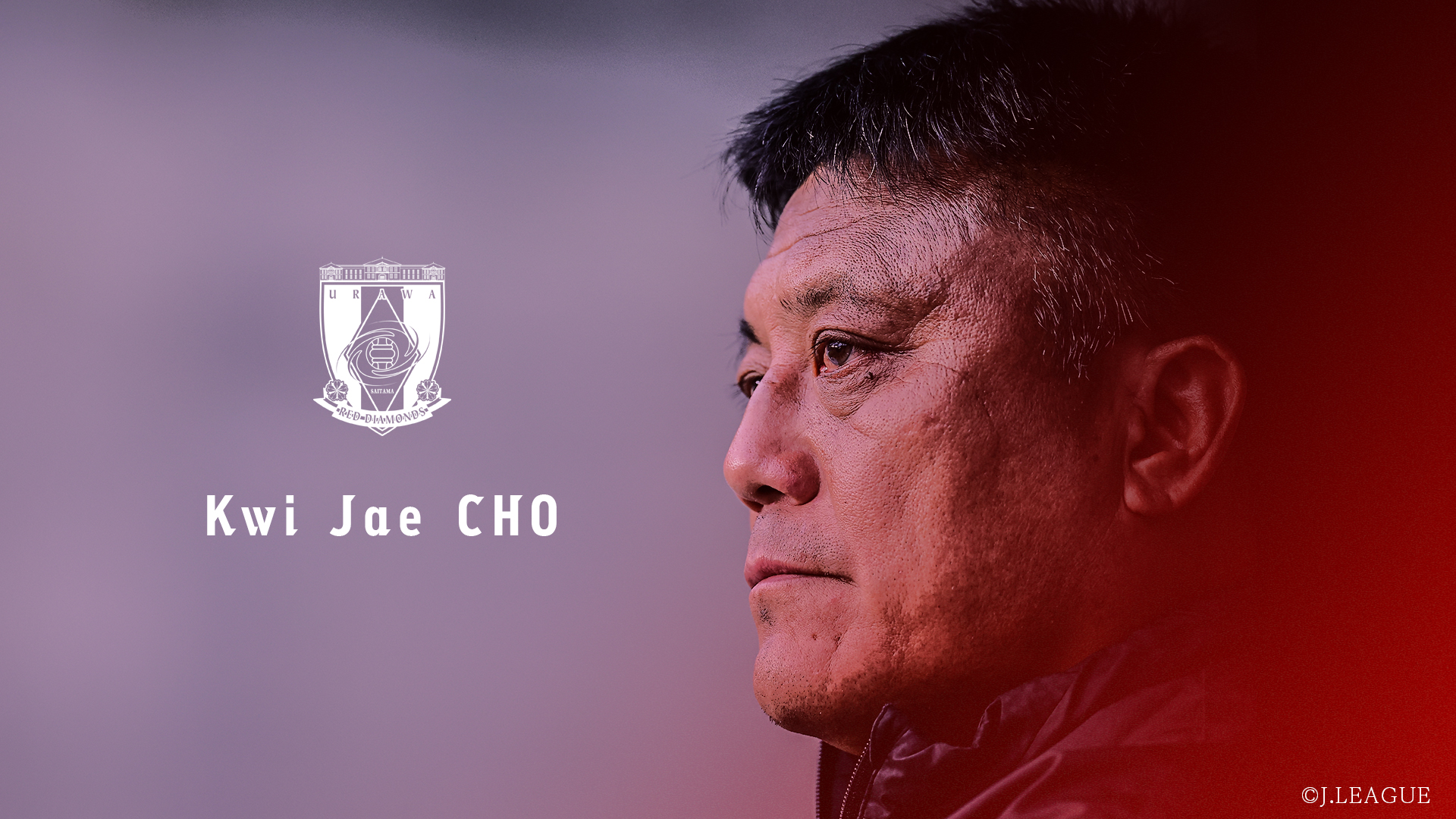
- Announcement of the appointment of Mr. Cho Kwi-jae as manager
- We are pleased to announce that Mr. Cho Kwi-jae has been appointed as the head coach of the first team, effective from the 2026/27 season.
-
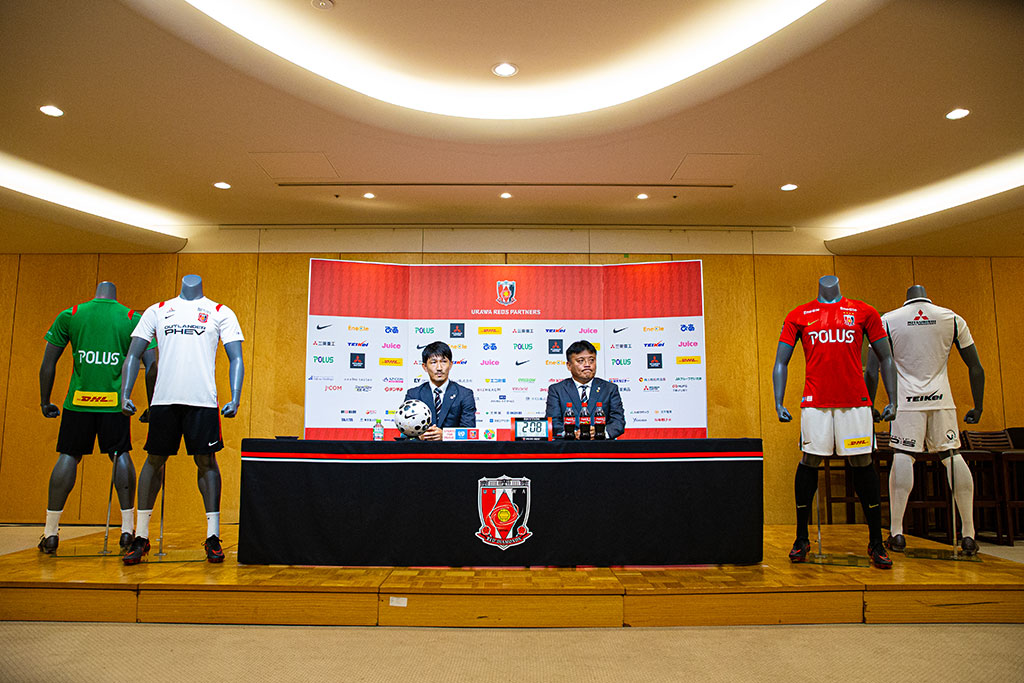
- Press conference announcing the appointment of manager Cho Kwi-jae
- On July 5th, at the "REDS START DAY 2026/27" held at Saitama Stadium, a press conference was held to announce the appointment of manager Cho Kwi-jae.
-
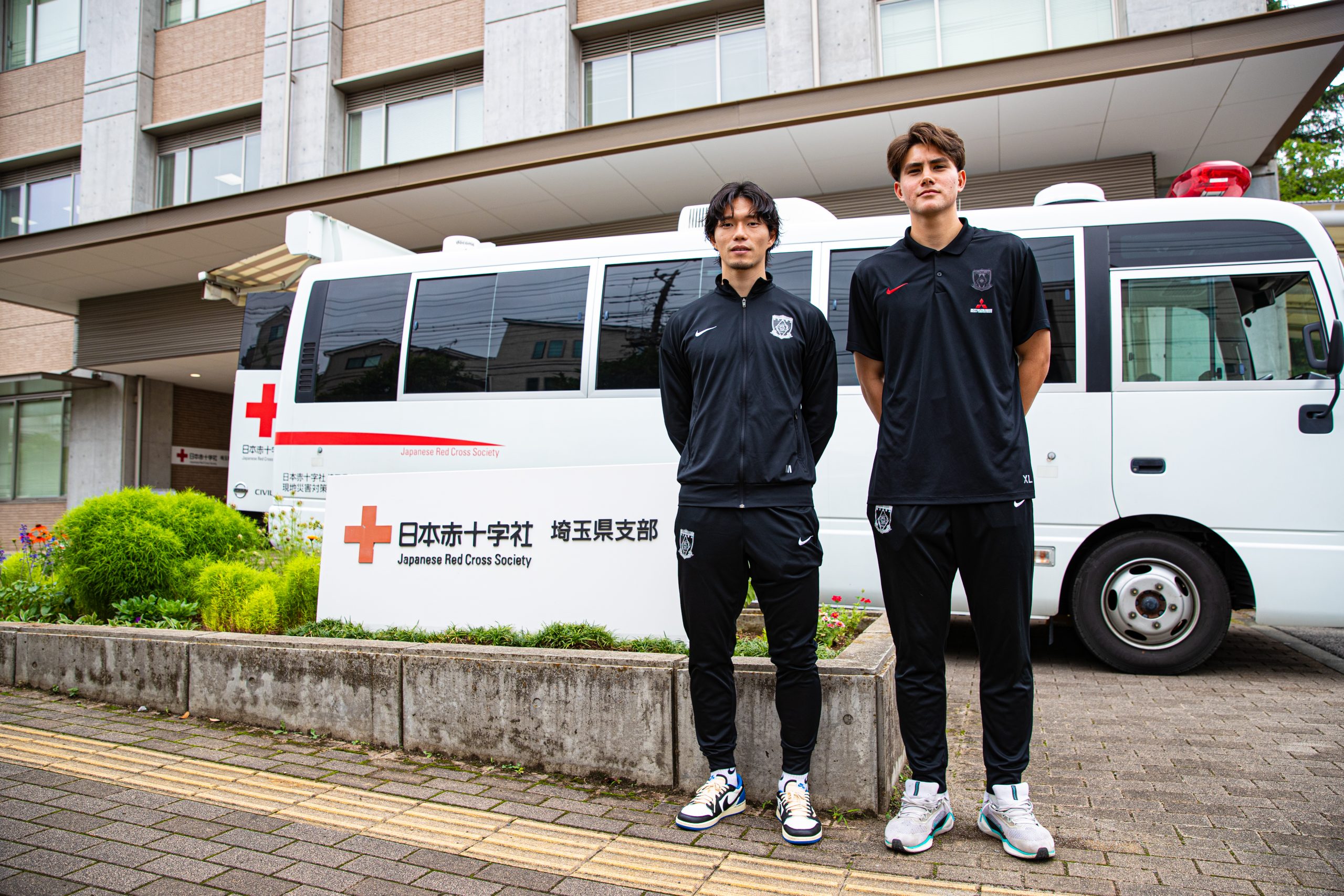
- Ogihara and Tanaka visited the Saitama Prefectural Branch of the Japanese Red Cross Society.
- On the 10th, Takuya Ogiwara and Yoshitaka Tanaka visited the Saitama Prefectural Chapter of the Japanese Red Cross Society as part of an initiative based on a cooperation agreement with the chapter.
-
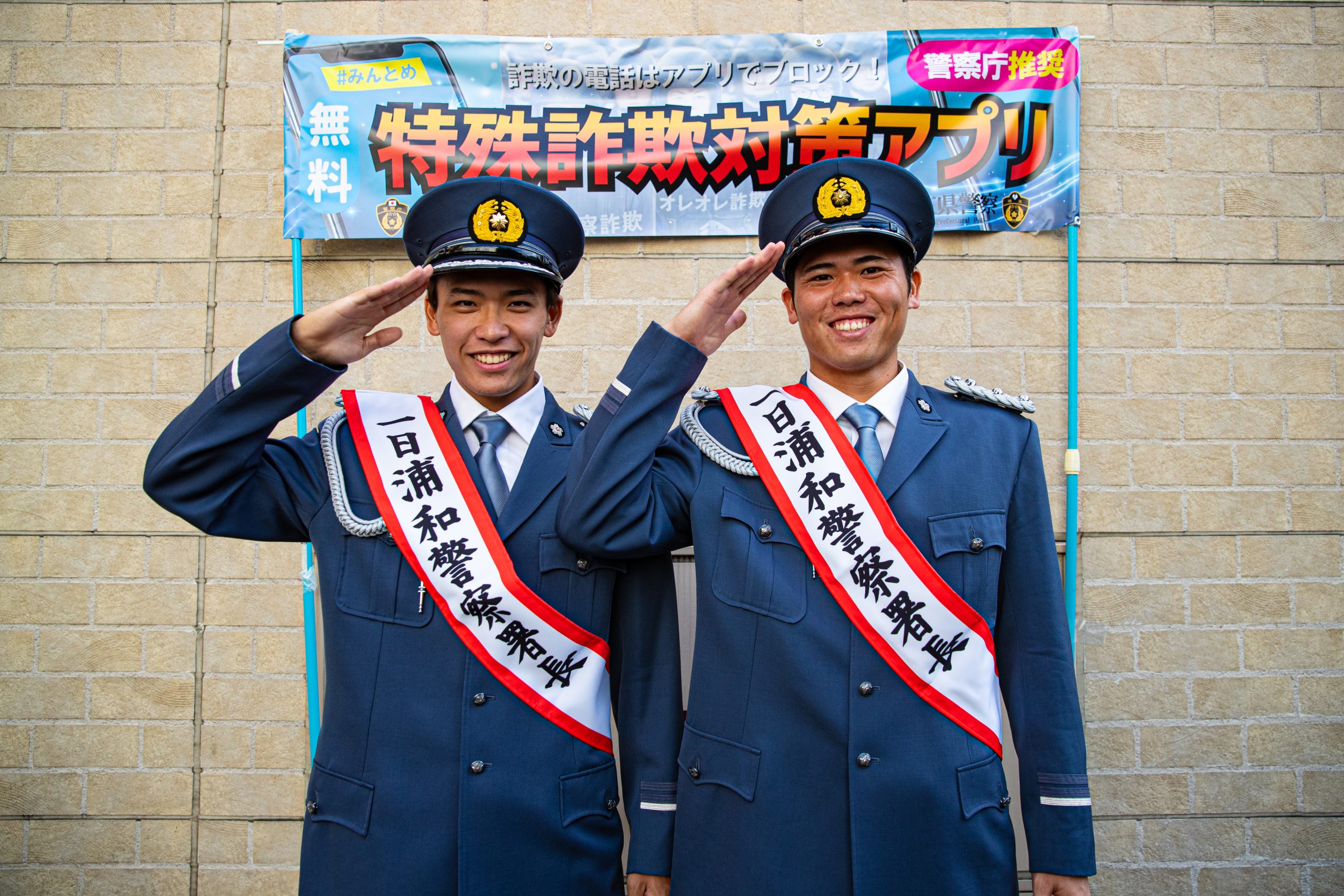
- Hidano and Sato appointed as one-day police chiefs
- On the 10th, Renji Hidano and Ryusei Sato were appointed as honorary police chiefs for a day at Urawa Police Station and participated in public awareness activities aimed at preventing special fraud.
-
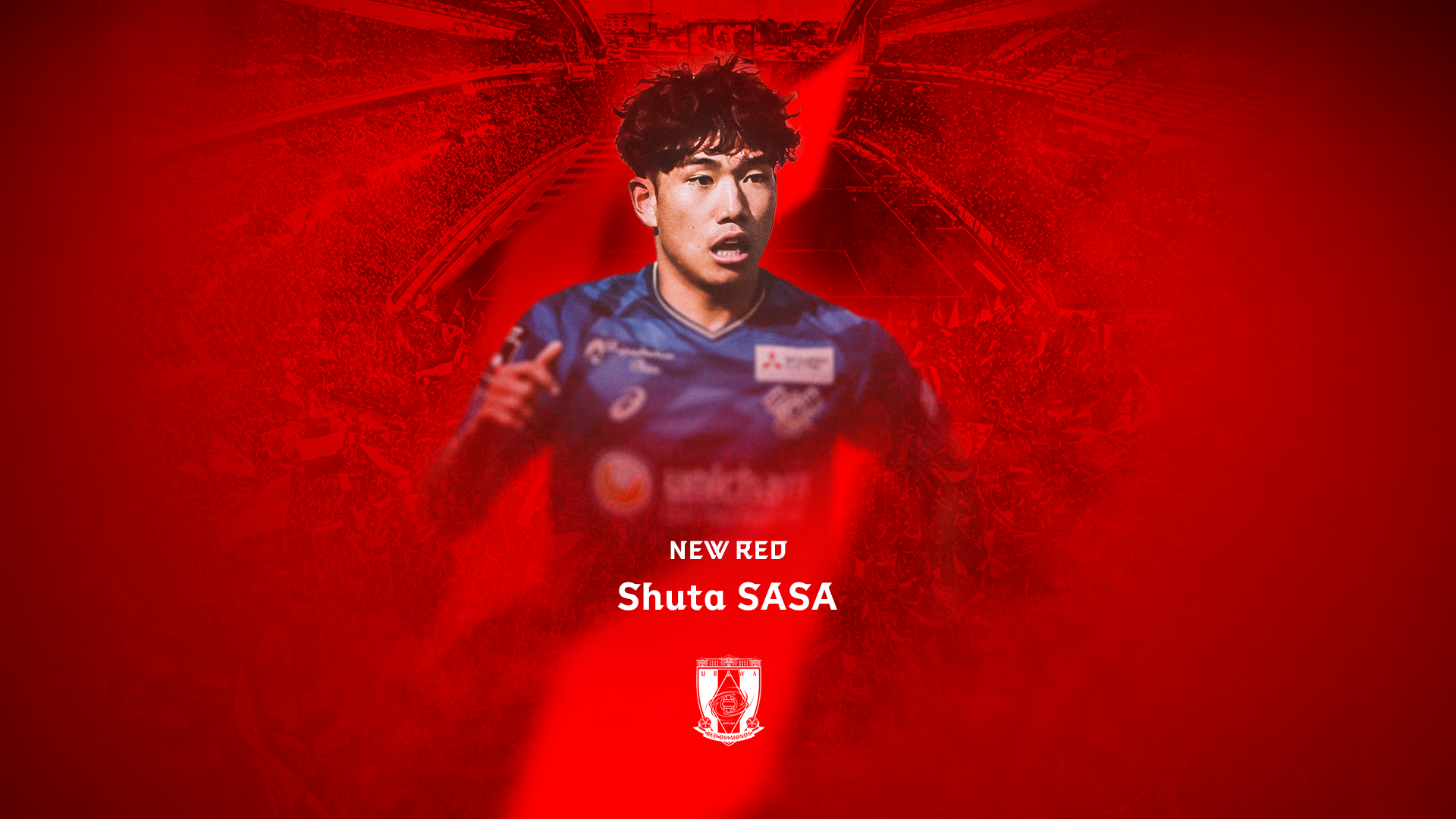
- Announcement of the permanent transfer of player Shuta Sasa
- We are pleased to announce that we have reached an agreement for Shuta Sasa (19 years old) to join our team on a permanent transfer from FC Imabari.
-
- Regarding the start of the 2026/27 season for the top team
- We would like to inform you of the start of the first team's activities for the 2026/27 season as follows.
-
- Announcement of Shun Yoshida 's permanent transfer to Fujieda MYFC
- We would like to announce that Shun Yoshida (29 years old) will be making a permanent transfer to Fujieda MYFC.
-
- Announcement of Rio Nitta 's permanent transfer to Yokohama F・Marinos
- We would like to announce that Rio Nitta (23 years old) will be making a permanent transfer to Yokohama F・Marinos.





![Partner Sales Representative [Official] X](https://www.urawa-reds.co.jp/wp-content/themes/reds2019/img/banner/partner_x_bnr.jpg.jpg)